
Reviewed · CRETE OLIVE OIL TOURS
Cretan Cooking Class and Olive Oil Tasting
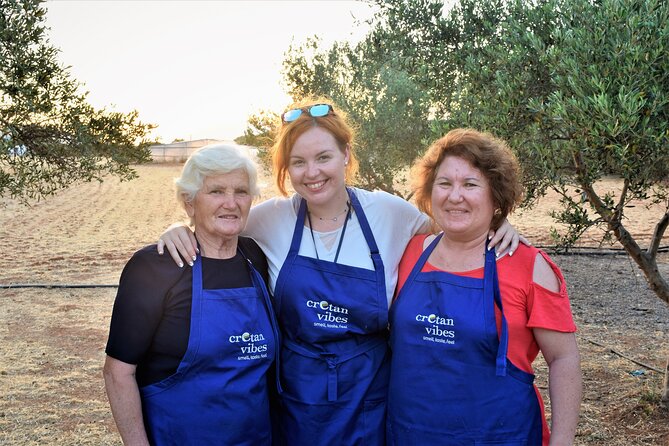
Cretan cooking makes the most sense when you get your hands into it. At Cretan Vibes, Marianna and her mother, Mama Stella, guide you through a meal on their family farm, with cooking, olive oil tasting, and a shared table all part of the same visit.
I like two things in particular: you do the cooking yourself, rather than just watching a demonstration, and the olive oil lesson gives you useful skills for choosing good oil later. The family setting also brings everyday food traditions to life in a way a restaurant meal cannot.
One practical consideration: the farm is rural, and transportation is not included. Plan how you will reach the meeting point before booking, and remember that much of the experience takes place outdoors, where poor weather can affect the schedule.
- Cook alongside Marianna and Mama Stella: The hosts teach step by step, with aprons, ingredients, and cooking equipment provided.
- Make a seasonal Cretan menu: Prepare about five dishes, with examples including dakos, stuffed grape leaves, zucchini flowers, and a main course.
- Taste olive oil with a grower’s guidance: Learn to notice aromas, flavors, bitterness, and signs of lower-quality oil.
- Eat what you make: The class ends with a full meal and local wine, while extra food is packed for you.
- Go home with useful reminders: Recipes are sent by email, and photos of the experience are provided afterward.
- Expect a small group: The maximum is 12 people, which leaves room for hands-on work and conversation.
A farm kitchen, not a restaurant demo
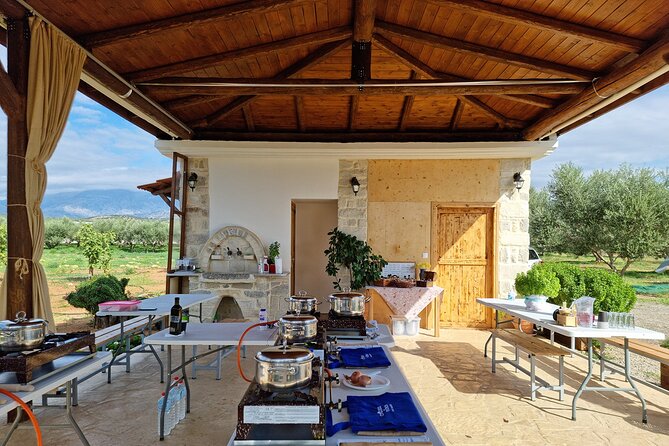
Cretan Vibes offers a roughly four-hour cooking experience at a family farm in Crete. The meeting point is listed as Cretan Vibes, Ethniki Odos, Moires 704 00, Greece, and the activity ends back there. The setting is described as rural and the cooking space as an open-air kitchen beside olive trees and gardens.
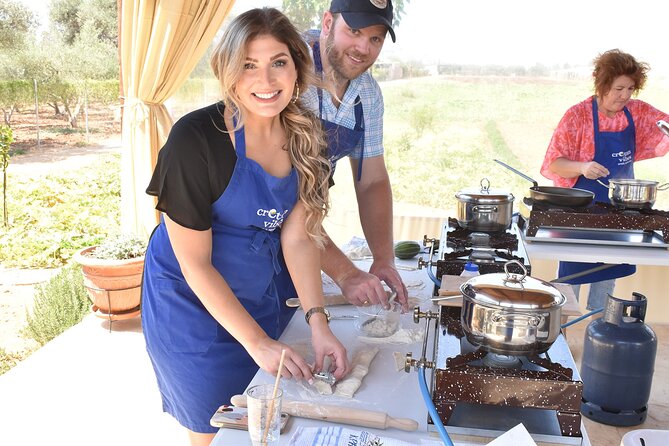
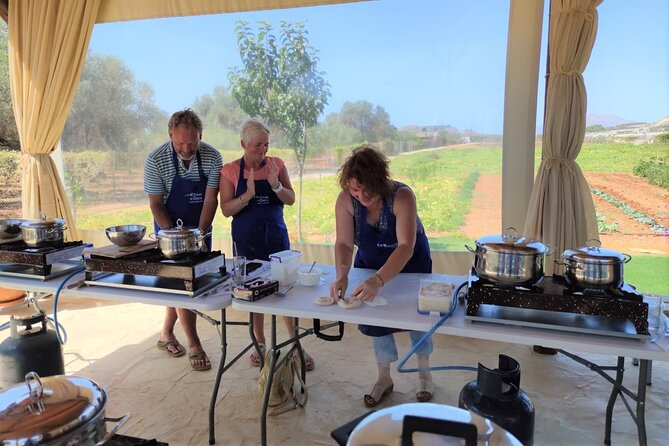
That setting shapes the experience. You are not simply being shown a polished plate or hearing a lecture about Cretan food. You are there to chop, prepare, cook, and share a meal, with Marianna and Stella guiding the work and explaining the food along the way.
The class is presented in English and is capped at 12 participants. That is small enough to feel personal, though the exact group size can vary. Some sessions may have only a few people, while others may be closer to the maximum.
Meet Marianna and Mama Stella
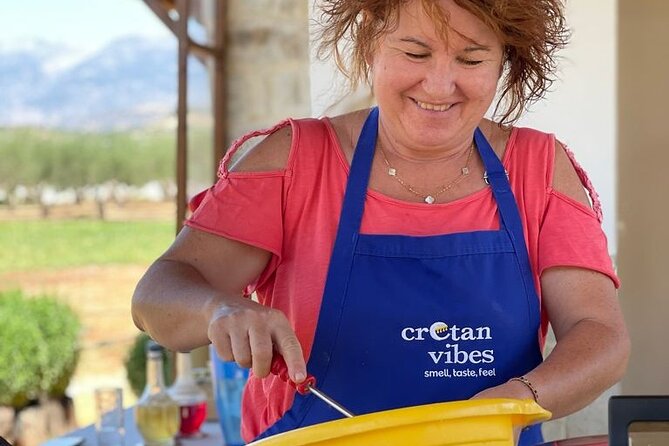
The mother-and-daughter team is central to the appeal. Marianna leads the class with her mother Stella, who shares family cooking methods and recipes. In some sessions, other family members may also be around; the hosts’ grandmother is mentioned as part of the family presence.
The teaching style is practical and welcoming. You can expect step-by-step help rather than pressure to arrive with cooking skills. The class is described as suitable for both beginners and experienced cooks, and the point is participation, not perfect knife work.
The family connection matters in a food class. Recipes such as mizithra cheese and ksinoxondros are described as family-made, and the food draws on ingredients from the farm and garden. That gives the cooking a sense of place: you are learning not just a list of steps, but how local produce and family habits shape the dishes.
More cooking classes around Crete:
- Chania: Authentic Cooking Class in the White Mountains
★ 4.9 · 529 reviews - The Real Cretan Cooking Experience
★ 5.0 · 528 reviews - Chania Cooking Class-The Authentic Enjoy traditional Cretan meal
★ 5.0 · 339 reviews
Getting started with local drinks and ingredients
The visit begins with a welcome and an introduction to what you will cook. Homemade refreshments, water, and coffee or tea are included, with examples such as Mama Stella’s lemonade and cinnamon drinks. Aprons and cooking ingredients are supplied, so you do not need to bring kitchen gear.
A useful detail is that the meal can change with the season. The hosts are said to vary the recipes through the year, and the sample menu includes dishes associated with spring or autumn. That makes the class less like a fixed demonstration and more like an introduction to what Cretan cooks make with what is available.
The cooking is described as fully hands-on. You may gather ingredients from the garden or help prepare produce picked on the farm. One example is working with artichokes, including the preparation needed before they go into a dish. The precise tasks will depend on the day’s menu.
Making a Cretan meal together
The sample menu gives a good idea of the flavors and techniques involved, though you should not expect every listed dish in a single class. The experience promises roughly five dishes and describes a three-course meal, while the menu offers several choices for starters, mains, and dessert. Ask the host about the day’s menu if a particular dish is important to you.
A starter might be Cretan dakos, a rusk topped with fresh tomato, mizithra cheese, oregano, and extra-virgin olive oil. It is a simple combination, but it shows how much of the cuisine depends on good produce and well-made staples rather than complicated techniques.
Other possible starters include dolmadakia, or stuffed grape leaves, and zucchini flowers filled and cooked in a traditional style. These dishes take more handwork than a quick salad, which is part of their appeal. You learn how ingredients are handled, folded, and prepared, not just how they taste when they arrive at the table.
Possible main courses range from vegetarian giaxni, made with green beans, potatoes, zucchini, tomato, and ksinoxondros, to lamb dishes with artichokes or stamnagathi. The menu also names avgolemono, a chicken or pork dish with greens, egg, and lemon, along with stifado made with chicken, rabbit, or snails. The choices show the breadth of home cooking on Crete, but they also mean that the meal may not match a single fixed menu.
Dessert may be sarikopites or kalitsounia, pastries filled with fresh Cretan cheese and fried in the family’s olive oil. It is a fitting finish to a class built around shared preparation and local ingredients. If you have a dietary restriction, raise it with the hosts before booking. One participant’s restriction was accommodated with care, but it is wise to confirm what can be arranged for your own needs.
Learning to taste olive oil
The olive oil session adds a useful second layer to the class. The hosts are an olive-growing family and explain how to recognize authentic extra-virgin oil, identify aromas and flavors, and notice bitterness. You also learn how to spot defects associated with lower-quality oil and what to look for when shopping.
This is more than an extra tasting poured alongside lunch. Good olive oil is central to many Cretan dishes, including the dakos, and knowing how to assess it can change what you buy and how you use it at home. The lesson is practical rather than technical: pay attention to what you smell and taste, and compare the differences.
The experience also includes a video of the family’s olive harvest. That offers a behind-the-scenes look at the work behind the oil, though it is not a substitute for seeing a harvest in person.
More olive oil tastings around Crete:
- Crete: Quad Safari, Olive Mill with Tasting & Ghost Village
★ 4.9 · 1,004 reviews - From Chania: Olive Oil, Wine, Cheese & Honey Tasting Tour
★ 4.6 · 490 reviews - Crete: Road-trip to Lasithi Plateau & Olive Mill Farm
★ 4.4 · 420 reviews - Heraklion: Olive Farm Tour with Tasting of Local Delicacies
★ 4.9 · 411 reviews
Sit down, eat well, and take food home
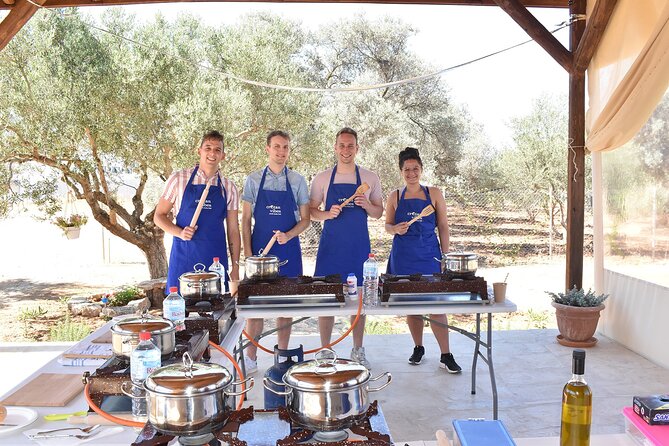
After cooking, you sit down to enjoy the meal with local Cretan wine. Homemade refreshments are included, as are coffee or tea. The meal is a major part of the value: you are not paying only for instruction, but also for a generous shared dinner made from the food you helped prepare.
Portions appear to be ample. Leftovers are packed for you to take away, a handy bonus if you are staying nearby or want an easy next meal. The farm setting, outdoor dining area, and chance to share the table with the hosts and other participants give the final part of the class a relaxed, social feel.
The recipes are sent by email, and photos of the experience are provided afterward. Those details help extend the value beyond the afternoon or evening itself. You can try the dishes at home and keep a record of the experience, rather than relying on memory alone.
What $114.93 buys you
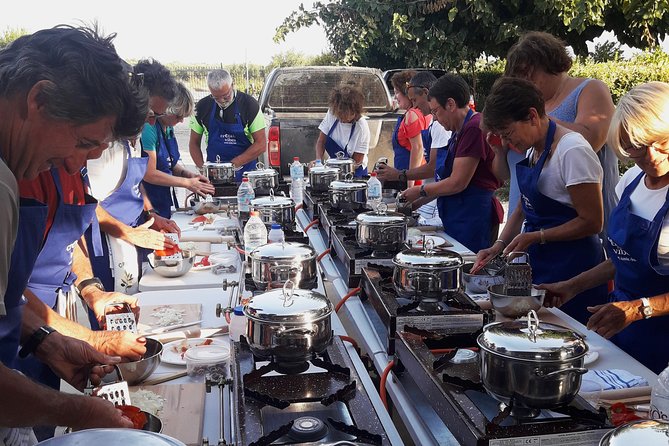
At $114.93 per person, this is not the cheapest way to eat in Crete. But the price covers about four hours of activity, ingredients, a hands-on class, an olive oil tasting, homemade drinks, a full meal, wine, recipes, and packed leftovers. You are also paying for a small-group format and time with a family who grows olives and cooks these dishes.
The value is strongest if you enjoy cooking or want more than a meal out. You leave with techniques and recipes, plus a better sense of how olive oil and local ingredients fit into Cretan food. If you only want a quick introduction to the cuisine, a restaurant meal will cost less and take less time.
The listed average booking lead time is 41 days, so this is worth arranging early if it is a priority for your trip. The maximum group size is 12, but a smaller group is possible. Private transportation is not included, and the location is rural, so work out your route before the day.
Who will enjoy this class most
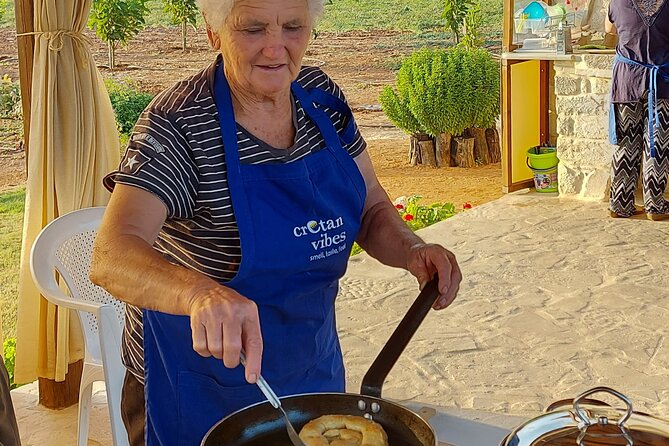
This is a good fit for curious cooks, food-minded visitors, and families who like doing things together. The experience has been enjoyed by children as young as nine and adults up to 78, so it can work across generations. The hosts’ patient, hands-on teaching also makes it approachable if you are not confident in the kitchen.
It is also a strong choice if you want a cultural activity that does not depend on a museum or formal tour. Cooking gives you a direct way to ask questions about ingredients, family recipes, and local food habits. You will spend much of the time participating, talking, and eating, rather than moving from one sight to another.
It may not suit you as well if you need a tightly fixed menu, prefer a short activity, or do not want to arrange transport to a rural meeting point. The outdoor setting is part of the charm, but it also makes weather a factor. If poor conditions lead to cancellation, you are offered another date or a full refund.
Should you book Cretan Vibes?
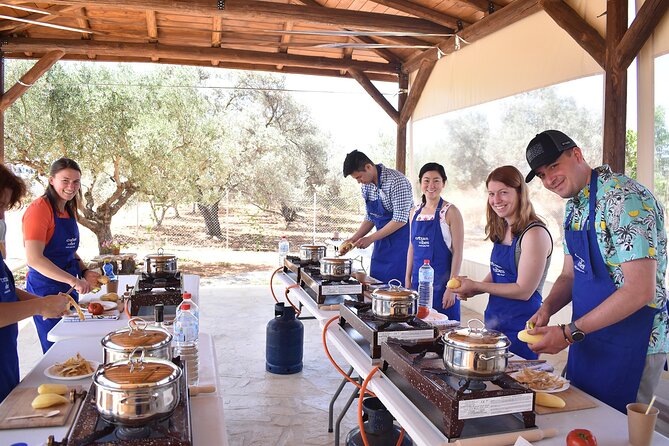
Book this class if you want to cook, eat, and learn in a family setting, and if the rural location works with your plans. The combination of farm-sourced ingredients, seasonal dishes, olive oil tasting, and a generous meal gives the visit more substance than a standard cooking demonstration.
Before you commit, confirm the meeting arrangements, ask about the day’s menu if you have a must-try dish, and discuss any dietary needs directly with the hosts. If you are happy to get involved and share a long meal, this is a particularly good way to spend an afternoon or evening in Crete.
FAQ
How long is the Cretan cooking class?
The experience lasts approximately four hours. Some descriptions of the class put the active visit at about three and a half hours, so allow roughly four hours in your plans.
What is included in the price?
The experience includes cooking ingredients, a full meal, premium olive oil tasting, local wine, homemade refreshments, coffee or tea, recipes sent by email, and leftovers packed to take away. Photos of the experience are also provided afterward.
Where does the class start and end?
It starts and ends at Cretan Vibes, Ethniki Odos, Moires 704 00, Greece.
Is transportation included?
No. Private transportation is not included, so you need to arrange your own way to the meeting point.
What dishes will I cook?
The class includes about five Cretan dishes, but the menu can vary. Possible dishes include dakos, stuffed grape leaves, zucchini flowers, a vegetable or meat main course, and a cheese-filled dessert.
Is the class suitable for beginners?
Yes. The class is described as suitable for beginners and experienced cooks, and the hosts provide step-by-step guidance.
How many people can join?
The maximum group size is 12 participants. Smaller groups may also take part.
What happens if bad weather cancels the class?
If poor weather causes a cancellation, you are offered a different date or a full refund.
More hands-on workshops around Crete
- Heraklion: Beginner Scuba Diving Lesson with PADI Instructor
★ 4.9 · 355 reviews - Full-Day Jeep Safari Tour with Cooking Lesson
★ 5.0 · 284 reviews - Moires: Cooking Class and Olive Oil Tasting at a Family Farm
★ 5.0 · 93 reviews - Crete: Sightseeing Day Trip with Cooking Lesson and Lunch
★ 4.8 · 77 reviews
More food and drink stops around Crete
- Crete: Sunset or Morning Quad with Local Products Tasting
★ 4.9 · 1,135 reviews - Chania: Old Town Highlights Guided Tour with Street Food
★ 4.9 · 407 reviews - From Chania: Wine and Olive Oil Tasting Tour with Snacks
★ 4.8 · 354 reviews - Walking “Food tasting tour” in the town of Chania
★ 5.0 · 297 reviews
Just added around Crete
- South Crete: Small group Full Day/ Sunset Sailing & Lunch★ 4.5 · 28 reviews
- Preveli Beach and Damnoni Kourtaliotikowaterfalls from Rethymno★ 5.0 · 23 reviews
- Full Day 4×4 Self-Drive Safari Tour in Crete with BBQ Lunch★ 5.0 · 68 reviews
- Small Group Sailing Cruise from Agios Nikolaos in Mirabello Bay★ 5.0 · 21 reviews
- Snorkeling Trip to Kourtaliotiko Gorge Waterfalls, Plakias, Crete★ 4.5 · 64 reviews
- Private Vehicle & Driver from Chania – Customizable Tour★ 5.0 · 23 reviews
- Knossos & Archaeological Museum Shared Guided Tour from Chania★ 5.0 · 41 reviews
- Sarakina Gorge hiking & swim Adventure – Jeep Safari South Crete★ 5.0 · 19 reviews
Crete Olive Oil Tours, compared.
Knossos-Zeus Cave -Old Traditional Villages-Olive Oil Factory
Read our review →
Olive Farm Tour with Tasting of Local Delicacies
Read our review →
Zeus Cave, Lassithi Plateau, Olive Oil Factory, Kritza, Pottery
Read our review →
Knossos, Lasithi, Lasinthos and Olive Farm Combo Tour
Read our review →Browse the lists this tour appears in