
Reviewed · CRETE FOOD TOURS
Food Tour in Heraklion – Discover Cretan Flavors
Heraklion’s food culture makes the most sense when you meet it on foot: a taste of bougatsa and coffee, a turn through the market, then a pause at a church or Venetian landmark to hear how the city’s past still shapes daily life. This four-hour walk links Cretan food with the streets and stories around it, rather than treating lunch as the whole event.
I like two things in particular: the mix of local tastings and historic sights, and the visit to a family-run workshop where you learn how traditional shepherds’ boots, called stivania, are made. One consideration: the pace can feel brisk, and street noise may make it hard to catch every word. Comfortable shoes are a must.
The tour at a glance
- Four hours on foot: The route crosses central Heraklion, linking food stops with churches, a market and Venetian-era landmarks.
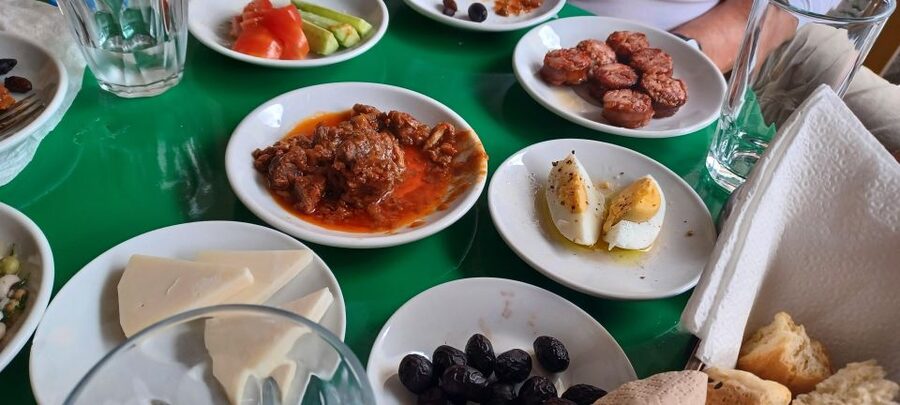
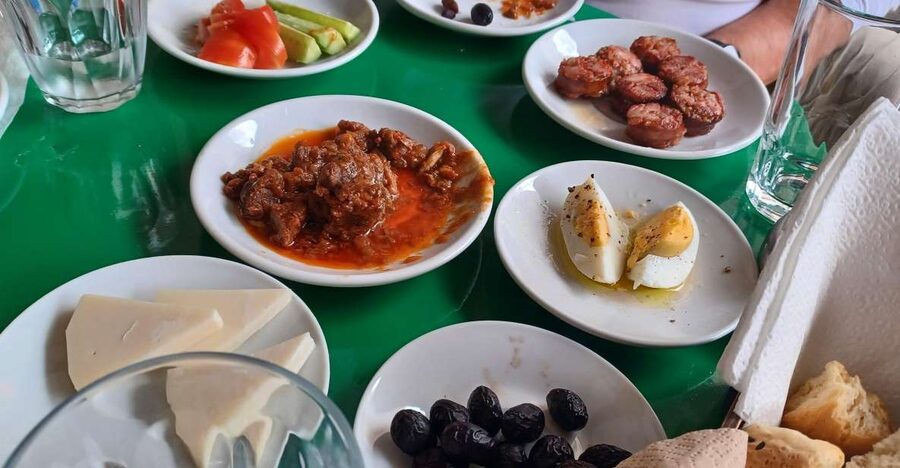
- A proper taste of Crete: Expect bougatsa with Greek coffee, local honey, traditional sweets, meze and raki.
- More than a meal: A family-run stivania workshop adds a hands-on look at local craft and shepherd culture.
- A host-led city walk: An English-speaking local host provides context along the way. Rallou is one host name associated with the experience, but the guide may vary.
- $106 per person: The price buys more than tastings. You are also paying for a four-hour guided walk with several cultural stops.
Starting near the Archaeological Museum
The tour begins in central Heraklion, outside the Archaeological Museum, with the meeting point described as the statue in the square. That is a useful place to start a city walk: you are close to major sights and can move straight into the historic center without spending the first part of the tour getting across town.
The route includes Plateia Eleftherias and Dedalou, where you will walk with the host and pause for photos. These early stops help set the city’s scale and give you a first sense of its mix of public squares, shops and older streets. The exact detail shared at each point depends on the guide, but the point of the walk is to connect Heraklion’s landmarks with its everyday food culture.
A small-group format is part of the experience, though no maximum group size is specified. That can make it easier to ask questions than on a large coach tour. Still, walking and listening in the city means you may need to stay close to the host, especially in noisy areas.
More food tours around Heraklion:
- Crete: Olive, Wine, & Raki on a Flavorful Culinary Journey
★ 4.7 · 56 reviews - Heraklion: History & Culture Walking Tour with Food Tasting
★ 4.9 · 8 reviews - Heraklion City: Greek Food Tasting Walking Tour
★ 4.6 · 7 reviews
Bougatsa, coffee and the first tastes
Food begins with bougatsa, a much-loved pastry, served with strong Greek coffee at a local café. It is a simple and satisfying introduction to the tour: rather than starting with a long explanation of Cretan cuisine, you get to taste a familiar local pairing and talk about the food as you eat.
The café stop also includes traditional sweets and local honey. Those small tastings offer a useful sense of how ingredients and recipes differ across the island, without turning the outing into a formal cooking class. The tour promises multiple food and drink tastings, but does not name every item in advance, so come ready for a range rather than one fixed menu.
If you have dietary restrictions, the details provided do not say what substitutions are available. It is sensible to ask the provider before booking rather than assume that every tasting can be changed.
Churches, squares and Venetian details
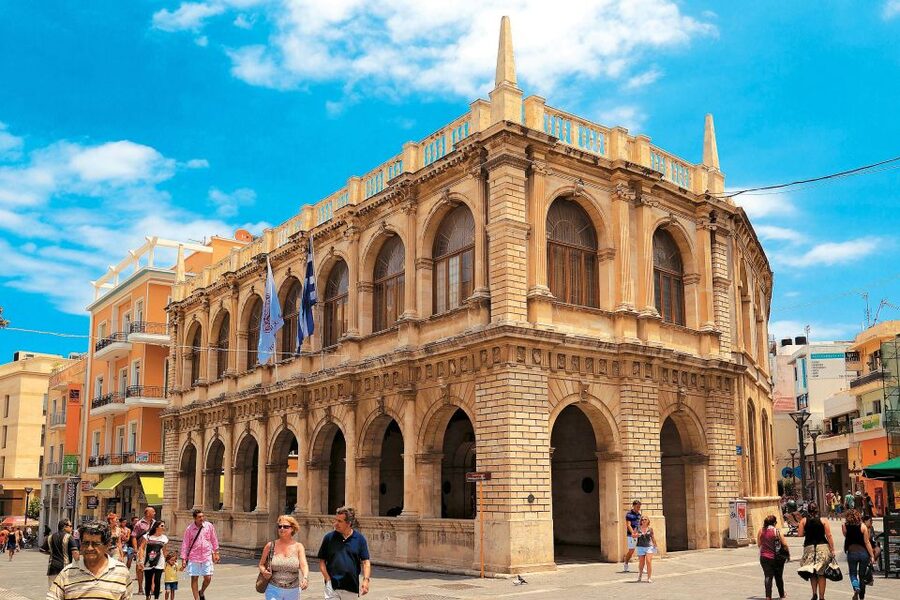
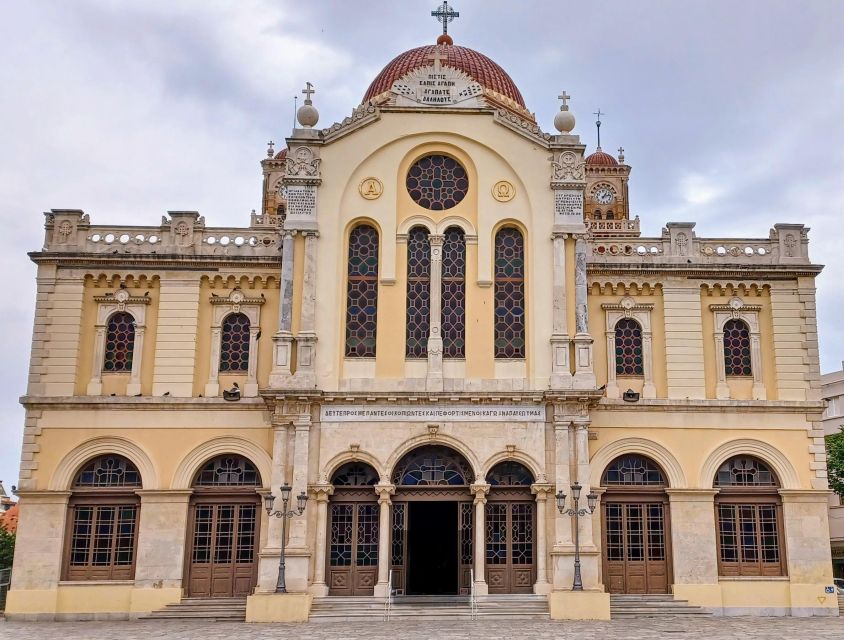
From the café, the walking route threads through central sights including the Basilica of Agios Markos, Morosini Lions Fountain, Venetian Loggia and Agios Titos Church. These stops break up the food portions and give the host room to explain how religion, civic life and trade have left their mark on Heraklion.
The Lions Fountain is a natural photo stop, while the Loggia gives you a closer look at the city’s Venetian civic architecture. At Agios Titos, the route brings you to one of the city’s significant churches. You should expect guided commentary and time to look around, not a lengthy private visit at each landmark.
That balance is one of the tour’s strengths. You get a broad walk through the center without needing to plan a separate route between every sight. The trade-off is that four hours must cover many places, so individual stops may be brief. If you want a full museum visit or a long church tour, plan extra time on your own.
The harbor and Rocca a Mare Fortress
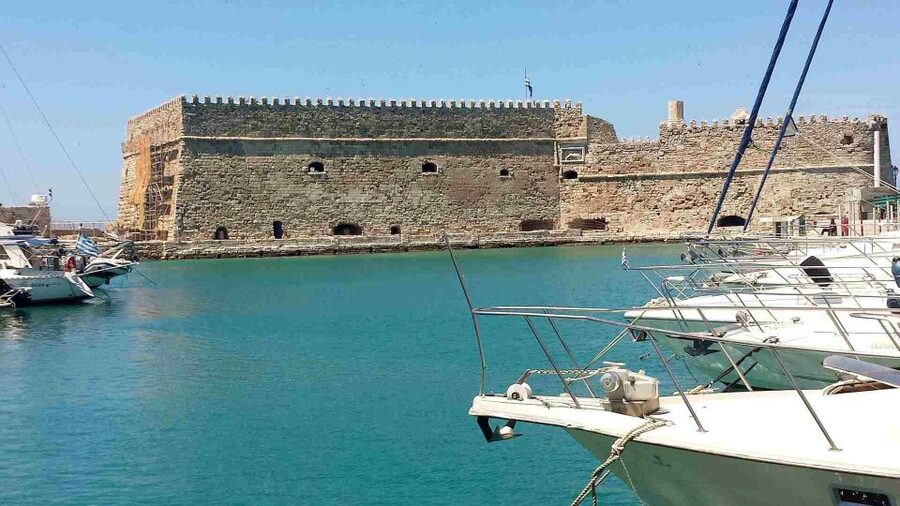
The route reaches the Venetian Harbor and Rocca a Mare Fortress, also known as Koules Fortress. The fortress guards the harbor entrance and makes a striking setting for a pause, photos and a little sightseeing. Its position also helps explain why Heraklion’s harbor mattered to the city’s trade and defense.
This is a welcome change of scene after the narrower streets and indoor food stops. You can take in the waterfront and see how the old port sits alongside present-day Heraklion. The tour description includes a break at the fortress, but does not promise entry inside, so treat it as a guided exterior stop unless your host says otherwise.
A brisk pace can be more noticeable here if you want time for photos or to linger by the water. The route is built to keep moving, and the waterfront is only one part of a packed half-day.
More food and drink stops around Heraklion:
- Crete: Sunset or Morning Quad with Local Products Tasting
★ 4.9 · 1,135 reviews - Heraklion: Wine Tasting E-Bike Tour
★ 4.9 · 17 reviews - Heraklion: Ecobike Tour with Wine Tasting
★ 4.8 · 13 reviews - Crete: Heraklion Food and City tour
★ 4.5 · 6 reviews
A family workshop and the stivania tradition
One of the more distinctive stops is a family-run workshop where you learn about stivania, the traditional leather boots worn by Cretan shepherds. The host explains the handmade process and the boots’ place in local life. This is a welcome change from the usual sequence of monuments and meals because it introduces a craft tied to the island’s working traditions.
The visit is cultural rather than a promise of a hands-on lesson or shopping stop. No specific workshop address or amount of time is given, so you should not expect a long demonstration. Even a short visit can add useful context: food is not the only way to understand a place, and the things people make and wear also tell stories about work, landscape and custom.
The Central Market and a meze finish
The Central Market brings the tour back to food in its most everyday setting. You can expect to walk among local products and hear about what people buy and eat, with the market’s colors and aromas adding a different feel from a seated tasting. It is a practical stop for noticing ingredients you may want to seek out later.
The food portion then builds toward a traditional taverna, where a generous selection of Cretan meze is served. Meze is meant for sharing and sampling, making it a good way to try several flavors rather than committing to one main dish. Raki is also included among the promised tastes and drinks. If you have room after the earlier pastry, honey and sweets, this is the most substantial part of the meal.
There is a small point worth clarifying before you set out: the food description says the tour ends at a traditional taverna, while the route names the Pastry History Museum as the final stop. The museum may follow the restaurant stop, but the exact ending is not fully clear. Ask the provider where the walk finishes on your date, especially if you have plans immediately afterward.
What $106 gets you
At $106 per person, this is not simply a cheap lunch. The price covers four hours with an English-speaking local host, multiple food and drink tastings, visits to local markets and traditional workshops, and a guided walk past several major sights. If you want a structured introduction to the city and its food, those elements make the price easier to justify than a meal alone.
The value depends on how you like to spend your time. You will get more from the outing if you enjoy moving between stops, hearing local stories and tasting several small portions. If your main goal is a long, relaxed restaurant meal, you may prefer to spend the same budget independently and linger at a taverna.
The available ratings are limited, so they cannot tell you everything about how the tour runs on a particular day. Still, the strongest praise focuses on the varied mix of local food and antiquities, the brisk but workable pace, and the way the eateries and historic sights fit together. A participant also singled out host Rallou for showing them Heraklion. Host assignments can change, so do not book on the assumption that she will lead your date.
Practical details before you book
Wear comfortable shoes. The experience lasts four hours and includes repeated walks between cafés, churches, the market, harbor and other stops. The pace is described as fast enough to cover the route, so shoes that are easy to walk in matter more than dressing for a long sit-down meal.
The tour is conducted in English. One practical concern is sound: street noise can make it difficult to hear the host in some places. A past participant suggested a microphone or headsets; neither is listed as part of the experience, so stay close and ask the host to repeat anything you miss.
The meeting point is at the statue in the square, with the starting location given as the Heraklion Archaeological Museum. Since the exact statue is not identified in the details, check the meeting instructions before setting off. The tour runs for four hours, and start times depend on availability.
Booking terms are flexible: you can reserve now and pay later, and cancel up to 24 hours in advance for a full refund. Food and drink tastings, the English-speaking host and visits to markets and traditional workshops are included. Anything not specified as included should be treated as extra.
Who will enjoy this walk
This tour suits you if you have a half-day in Heraklion and want a guided orientation that brings together food, history and everyday city life. It is especially useful near the start of a stay: after walking the center with a local host, you will have a better sense of where to return for a meal or another look at a landmark.
It is also a good fit if you like trying several dishes in small portions and prefer a moving tour to sitting through a long meal. The stivania workshop gives the outing a point of difference, while the market and taverna stops keep the focus firmly on local food.
You may want another plan if you need a slow pace, want extensive time inside each sight, or have dietary needs that require confirmed alternatives. The experience includes many stops in four hours, and the itinerary is built around walking and group tastings rather than a custom route.
Should you book it?
Book this tour if you want Heraklion served in a few thoughtful portions: a pastry and coffee, market sights, churches and Venetian landmarks, a traditional craft, then meze and raki. Its best value is the connection between what you eat and the city around you. Before booking, confirm the final stop and ask about dietary needs; on the day, wear comfortable shoes and stay close enough to hear the host.
FAQ
How long is the Heraklion food tour?
The tour lasts four hours.
What is the price?
The listed price is $106 per person.
What language is the tour in?
The host or guide speaks English.
Where does the tour start?
The starting location is the Heraklion Archaeological Museum. The meeting point is described as the statue in the square.
What food and drinks are included?
The tour includes multiple tastings. Named examples are Cretan bougatsa, Greek coffee, local honey, traditional sweets, meze and raki.
Does the tour visit Heraklion’s Central Market?
Yes. The route includes a guided walk through the Central Market.
Which landmarks are included?
The route includes places such as the Morosini Lions Fountain, Venetian Loggia, Agios Titos Church, Rocca a Mare Fortress and Agios Minas Cathedral.
Is there a traditional craft stop?
Yes. The tour includes a visit to a family-run workshop where you learn about stivania, traditional leather boots worn by Cretan shepherds.
What should I bring?
Comfortable shoes are recommended for the four-hour walking tour.
Can I cancel for a refund?
Yes. You can cancel up to 24 hours in advance for a full refund.
More food experiences around Heraklion
- Heraklion: Family Zorba Treasure Hunt with Food Stop
★ 4.8 · 5 reviews - Heraklion: Private Food and Wine Tour with a local Sommelier
★ 5.0 · 3 reviews - Chania: Old Town Highlights Guided Tour with Street Food
★ 4.9 · 407 reviews - Walking “Food tasting tour” in the town of Chania
★ 5.0 · 297 reviews
Just added around Heraklion
- SUP Safari – Catamaran Cruise Dia Island & Gourmet Delights!★ 5.0 · 9 reviews
- Heraklion: Dia Island Sunset Boat Tour with Dinner★ 5.0 · 61 reviews
- Lygaria: Private Motorboat Cruise with Snorkeling & Swimming★ 5.0 · 5 reviews
- Private tour: Archeological Museum of Heraklion★ 5.0 · 3 reviews
- Heraklion: Dia Island Private Sailing Cruise with Full Meal★ 5.0 · 6 reviews
- Minoan Path: Knossos Palace, Winery Visit, Lunch at Archanes★ 5.0 · 7 reviews
- Crete: Lasithi Plateau & Knossos Palace Tour★ 3.8 · 10 reviews
- From Heraklion Port: Highlights & Knossos Palace Shore Tour★ 4.5 · 6 reviews
Crete Food Tours, compared.

Old Town Highlights Guided Tour with Street Food
Read our review →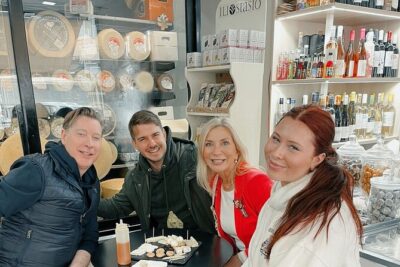
Walking “Food tasting tour” in the town of Chania
Read our review →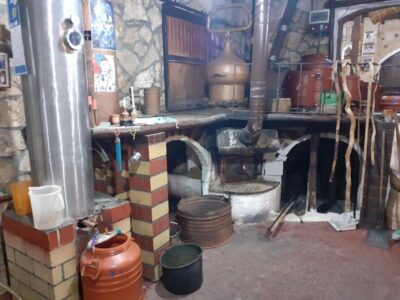
Full-Day Cretan Wines, Olive Oil, Raki and Food Tour
Read our review →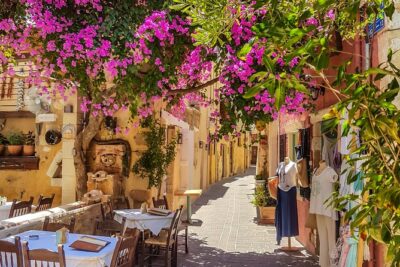
Rethymno Old Town: A Traditional Cretan Food Tour
Read our review →

Chania Food Stories Half-Day Tour inc. tastings & drinks
Read our review →Browse the lists this tour appears in