
Reviewed · CRETE TOURS
From Chania: Crete World War II History Tour
Crete’s Battle of Crete is easier to understand when you can stand where it unfolded. This six-hour tour links Maleme airfield, Tavronitis Bridge, Galatas, and the war cemeteries, giving the invasion and the resistance a real sense of place.
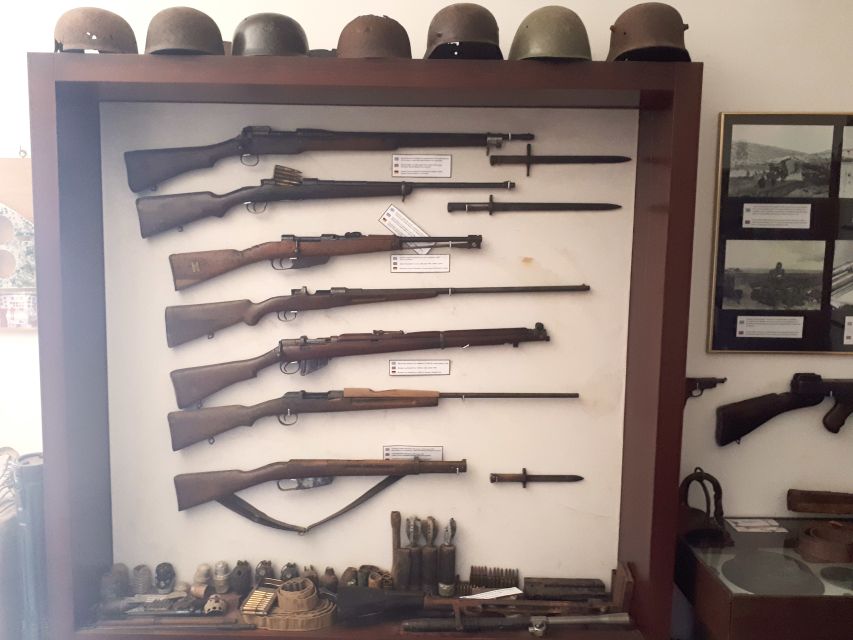
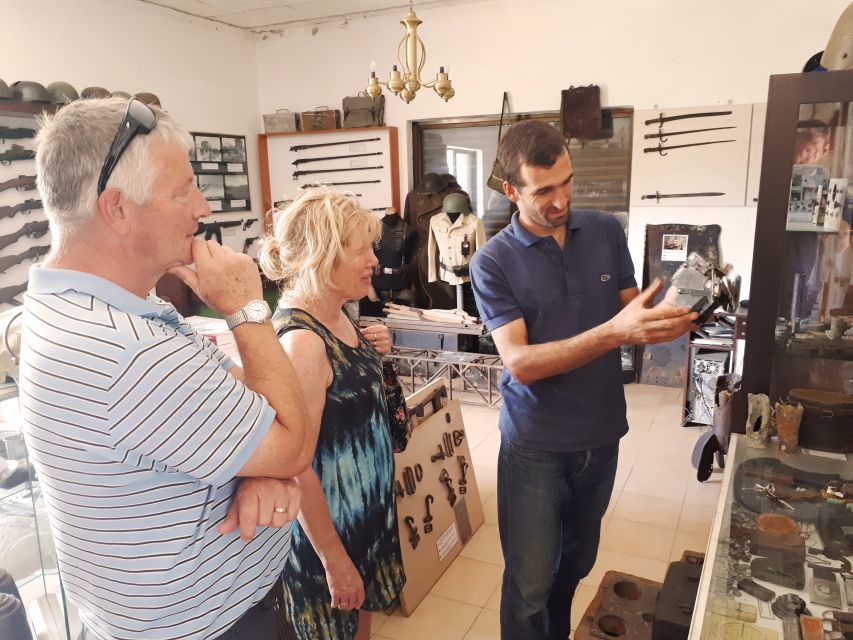
I like two things in particular: the route connects major battle sites with small museums and shelters, and the guides use maps, photographs, and local stories to explain how events fit together. Visits to a local collector’s WWII artifacts can add a close-up look at objects found around the island.
One consideration is the pace of a history-packed day. There is a snack and water, but lunch and comfort breaks may be limited, so plan ahead and ask your guide about a restroom stop if you need one.
Key points before you book
- Maleme and Hill 107 help explain why the airfield mattered during the German invasion.
- Tavronitis Bridge and Galatas bring the story from broad military movements down to specific places.
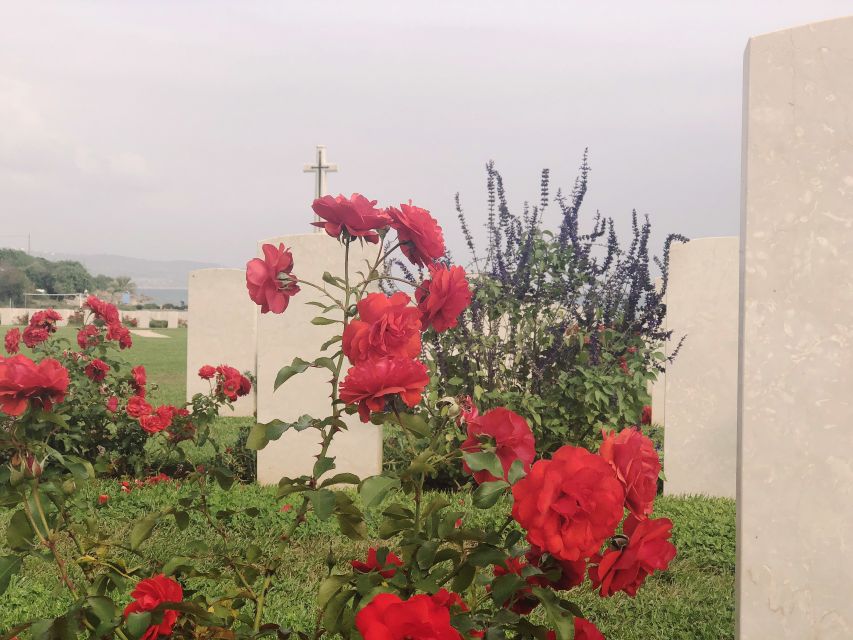
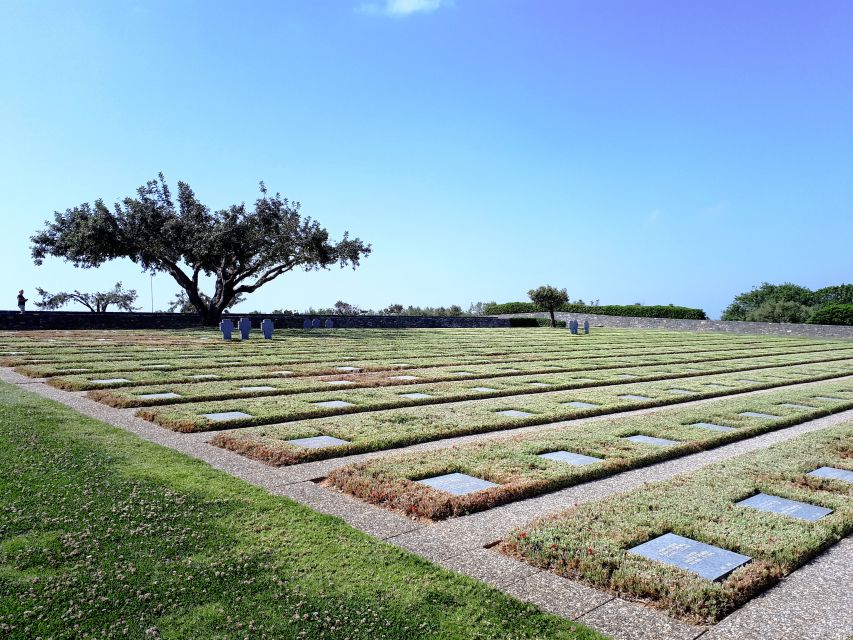
- War cemeteries for German and Allied forces give the tour a quiet, reflective finish.
- Guides such as Yannis, also spelled Yanis or Yonis, and Babis have led tours, using maps, photographs, and local knowledge to clarify the battle.
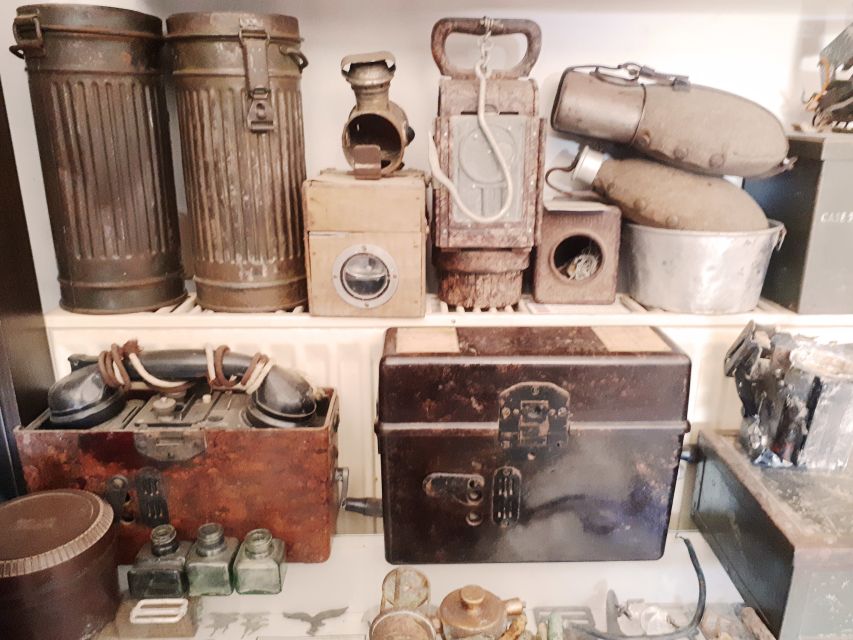
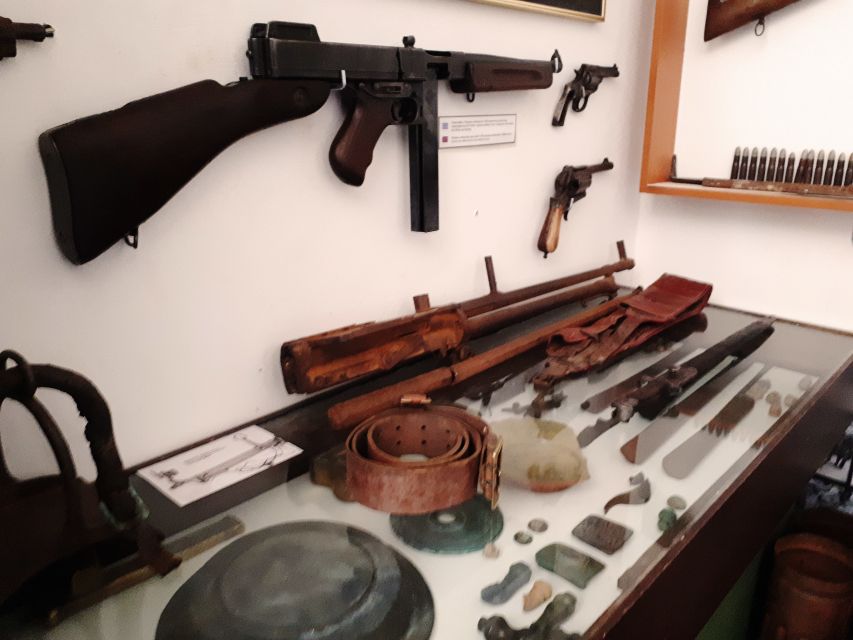
- A private collection of WWII artifacts may be included, offering a close look at objects gathered in the area.
- The tour costs $111 per person and includes transport, entrance fees, a snack, and a bottle of water.
Start with Crete’s part in the wider war
This tour is not just a drive past wartime landmarks. It sets the Battle of Crete within the lead-up to the invasion, beginning with the Greek-Italian War of 1940 and the circumstances that led Hitler to launch Operation Mercury. That context matters: the island’s battle was part of a larger struggle across Greece and southeast Europe, not an isolated episode.
Your guide helps link military decisions to places you can see. Maps and old photographs have been used to show troop movements and to make the geography legible. For a subject involving airborne landings, scattered fighting, and a changing front, that visual support can turn a string of stops into a coherent account.
The story also includes the Cretan resistance and the partisans who helped British, Australian, and New Zealand forces. You hear not only what happened during the invasion, but how local people responded and how the battle affected Allied morale. That wider frame makes the tour useful even if you arrive knowing little about Crete in WWII.
More history tours around Chania:
- Chania Battle of Crete Private Tour: WW2 Military History
★ 5.0 · 16 reviews - From Heraklion: Historical Center City Tour & Knossos Palace
★ 4.4 · 340 reviews - Richtis Waterfall, History, Azoria, OliveTasting, NorthCoast
★ 5.0 · 83 reviews
Maleme airfield: where the invasion took shape
Maleme is one of the day’s central stops. German paratroopers first landed here, and the airfield became a key part of the battle. Seeing the site from above helps you grasp its position and why control of it mattered. The view is more than a photo opportunity: it gives the guide a practical way to explain the movement of forces across the area.
Hill 107 is also associated with the explanation of the battle around Maleme. Here, the use of maps and photographs can help you picture the action and follow the sequence of events. If you are new to the subject, this sort of site-based explanation is valuable. You are not expected to arrive with a military map in your head.
The land itself is not a preserved battlefield in the sense of an untouched historic set. The value lies in standing at the location while your guide interprets it. Keep comfortable shoes on, since you will be getting in and out of the minivan and visiting several outdoor sites.
Tavronitis Bridge and Galatas: following the front
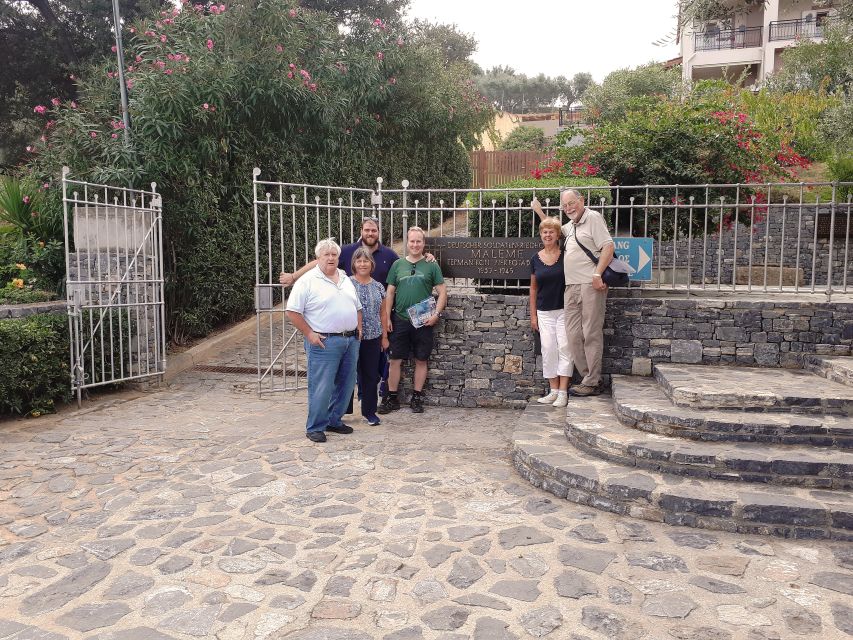
At Tavronitis, the bridge and surrounding area offer another piece of the battle’s geography. The tour points out remnants and monuments connected with the fighting, then moves on to Galatas, where you learn about the battle there. These stops help show how the conflict extended beyond the landing area and developed across several communities.
Galatas is especially useful as part of the larger route. Rather than treating the Battle of Crete as a single dramatic moment, the guide can show how events played out at different sites. That approach gives you a better sense of the scale of the fighting and the role of local resistance.
Expect the guide to do much of the interpretive work. The sites themselves may not explain every detail, so the stories, maps, and photographs are central to the experience. If you have a family connection to the campaign, or a particular unit or place you want to learn about, bring that question along. The tour’s local focus can make those details feel closer to the ground.
Shelters, small museums, and wartime objects
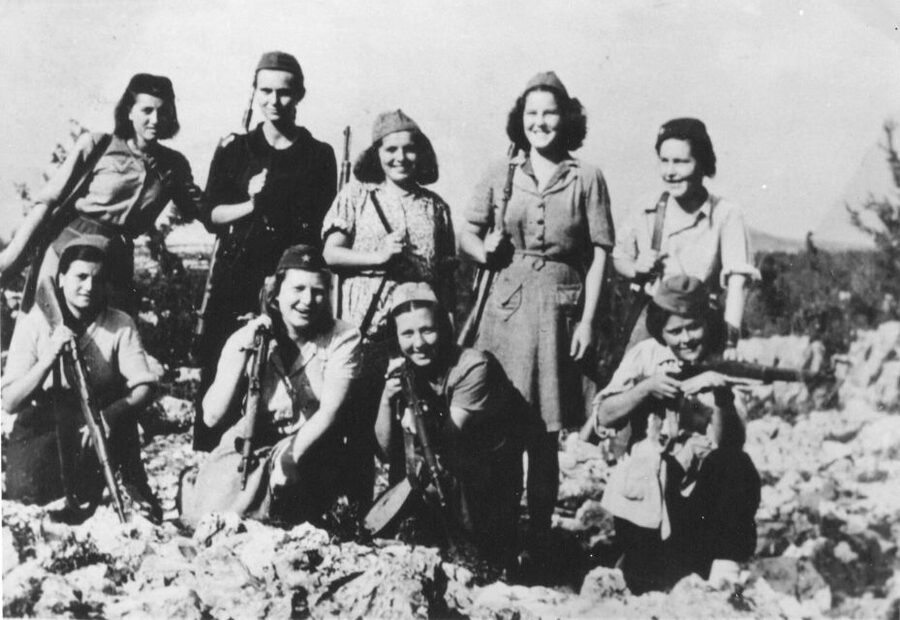
The itinerary includes small museums and secret shelters, along with monuments and remnants from the war. These quieter stops fill in some of the everyday details that a battlefield view cannot provide. They also offer a change of scale: from military movements across a region to the traces of war preserved in a room or shelter.
A visit to a private local collector’s collection has been a memorable feature of the tour. The collection includes WWII items found in the area, and the collector can explain the background of individual pieces. Seeing objects up close adds texture to the history, though the amount of time spent discussing them can vary. If you prefer more time outdoors or at the cemeteries, you may want to ask your guide how the day is paced.
Guides have used old maps and photographs to set these objects and locations in context. Several guides named by past participants include Yannis, also written as Yanis or Yonis, as well as Babis and Janis. The assigned guide can vary, so treat those names as examples rather than a promise. The consistent appeal is the chance to hear the story from someone who knows the island and can connect its wartime history with Cretan life more broadly.
More trips and days out around Chania:
- From Kissamos Port: Boat Cruise to Balos Lagoon & Gramvousa
★ 4.2 · 6,755 reviews - From Chania: Full-Day Samaria Gorge Trek Excursion & Guide
★ 4.6 · 3,191 reviews - Cretan Safari – 4×4 Adventure to Preveli Beach with Lunch
★ 5.0 · 780 reviews - Elafonissi Beach Day Trip from Chania -Stop in Elos Village
★ 4.5 · 744 reviews
The cemeteries: a quieter end to a demanding story
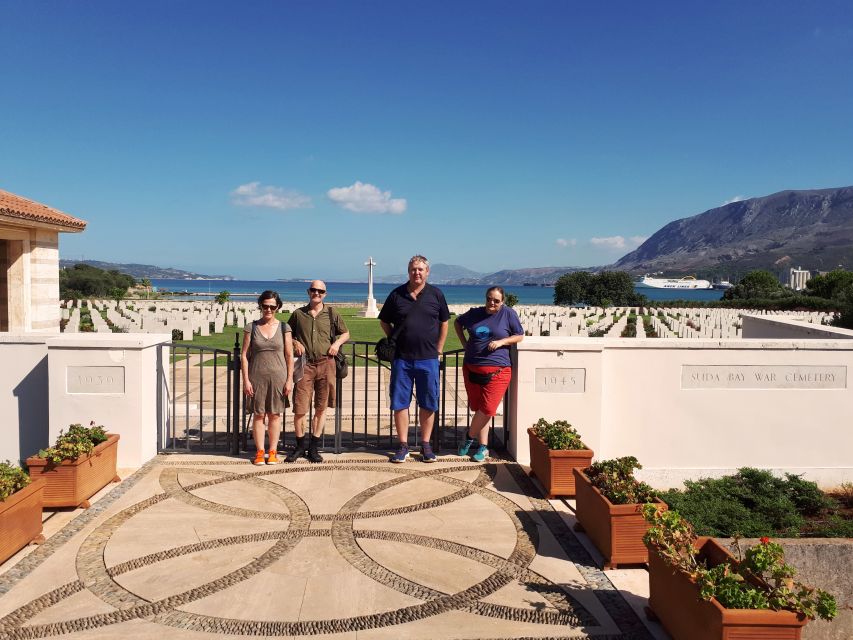
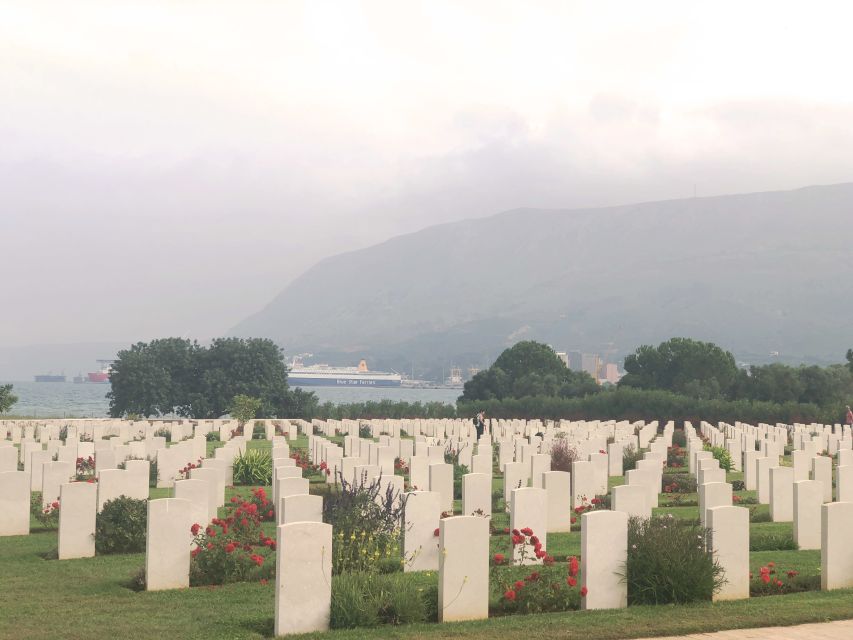
The tour visits cemeteries for German and Allied forces, including the Commonwealth cemetery at Souda Bay. These carefully kept burial grounds bring the cost of the campaign into focus after a day spent following its military course. The German cemetery is also part of the route, providing space to consider the losses on both sides.
Give these stops the attention they deserve. For some people, the cemeteries are the most personal part of the day, especially if a relative fought in the Battle of Crete. Time at each site can matter, and the schedule may feel tight if you want a long, unhurried visit. If one cemetery is a particular reason for booking, tell your guide early and ask how much time is planned there.
The cemeteries also help the tour avoid reducing the battle to strategy alone. You have heard about paratroopers, troop movements, and resistance; here, the names and graves bring the human consequences forward. It is a solemn finish, and a welcome pause after several stops.
Six hours in a minivan: what the day feels like
The experience lasts about six hours and uses an air-conditioned minivan for transport. Pickup and drop-off are available from specific locations in the Chania region only. A small group makes it easier to hear the guide, ask questions, and follow the discussion than it would be on a large coach tour.
This is a site-to-site excursion, so expect time on the road between stops as well as time on your feet. The route covers several locations, and the van provides a comfortable base between them. In hot weather, the air conditioning can make a real difference. One guide has also taken care to help a participant with mobility needs, but the tour does not provide specific accessibility details, so check your needs with the operator before booking.
The schedule deserves a little thought. The stated duration is six hours, though some accounts describe a day closer to six and a half hours. There has also been feedback about having only one scheduled comfort stop. A guide may be able to make an extra stop, but it is sensible to ask at the start rather than assume one will be built in.
Food is light. A snack and a bottle of water are included, and some outings have included a bakery snack or accommodated dietary requirements. A full meal stop is not guaranteed, so eat beforehand and carry any extra food you may need. One practical suggestion is to ask whether the day’s plan includes time to sit and eat a sandwich.
Is $111 fair value?
At $111 per person, this is more than a transfer between historic sites. The price includes Chania-region pickup and drop-off, air-conditioned transport, an English- or Greek-speaking driver-guide, a local guide, entrance fees, local taxes, a snack, and water. For a six-hour small-group outing, those inclusions make the cost easier to assess than a ticket-only attraction.
The real value is in the interpretation. Maleme, Tavronitis, Galatas, and the cemeteries are more meaningful when a guide connects them to the invasion, the resistance, and the wider war. Maps, photographs, local stories, and a possible private collection add detail you would have to piece together on your own.
It is best value if you have a genuine interest in WWII history or want a clear introduction to the Battle of Crete. If you mainly want scenic stops or a relaxed day with a long lunch, this is not the right fit. The route is history-led, and the amount of material covered is substantial.
Who should book this Battle of Crete tour?
I would put this tour high on the list if you want to understand the battle at the places where it happened. It suits history-minded visitors, people with family connections to the campaign, and anyone who wants to hear the Cretan perspective alongside the Allied story. The small group and local guiding are strong reasons to choose it over a self-guided drive.
It is less suitable if you need a leisurely schedule, a guaranteed full lunch break, or extended time at one specific cemetery. Ask about comfort stops, the day’s food plan, and the cemetery schedule before setting out. Wear comfortable shoes, bring any extra water or food you need, and allow for a full half-day away from Chania.
At 4.9 from 65 ratings, the tour has a strong record, and its best feature is the guide’s ability to make a complicated battle understandable. Book it if you want history with substance and can accept a busy itinerary. If the cemeteries are your main reason for going, make sure the planned time there matches what you need.
FAQ
Where does the tour depart from?
Pickup and drop-off are available from specific locations in the Chania region. The tour only departs from that region.
How long does the tour last?
The stated duration is six hours. Some descriptions of the day place it closer to six and a half hours, so allow flexibility in your plans.
What languages are available?
Live guiding is available in English and Greek.
Which WWII sites does the tour visit?
Key locations include Maleme, Tavronitis Bridge, and Galatas, as well as German and Allied war cemeteries. The tour also visits wartime monuments, remnants, and small museums or shelters.
Does the tour visit Maleme airfield?
Yes. You see the Maleme airfield from above, and the guide explains its place in the Battle of Crete.
Is a private collection of WWII artifacts included?
A visit to a local private collector’s WWII collection has been part of the tour. Ask when booking if you need to confirm whether it is included on your date.
What is included in the price?
The tour includes transport by air-conditioned minivan, pickup and drop-off at specified Chania-region locations, an English-speaking driver-guide, a local guide, entrance fees, local taxes, a snack, and a bottle of water.
Is lunch included?
A snack and a bottle of water are included, but a full lunch is not specified. Bring extra food if you need more than a snack.
What should I bring?
Wear comfortable shoes. You may also want to bring extra water or food, especially if you prefer more than the included snack.
Can I cancel for a refund?
You can cancel up to 24 hours in advance for a full refund. Reserve-now, pay-later booking is also available.
Just added around Chania
- From Chania Private half day Winery-Olive factory-Kournas lake★ 5.0 · 50 reviews
- Winery Tour and Kourna’s Lake from Rethymno★ 5.0 · 4 reviews
- Wine, Dine & Divine: A Cretan Odyssey in Chania.★ 5.0 · 5 reviews
- Wine Tasting: Meet the Cretan Vineyard at West Chania★ 5.0 · 22 reviews
- Wine, Beer, Olive Oil Tasting Private Tour (price per group of 6)★ 5.0 · 4 reviews
- Minoan Crete from 3.000 BC: Knossos Palace & Museum with Wineries from Chania★ 5.0 · 6 reviews
- Wine & Olive Oil Tour with lunch at the White Mountains★ 5.0 · 71 reviews
- Cruise Ship Guest Beer & Food Tour – Chania Old Port★ 5.0 · 26 reviews
Crete Tours, compared.
From Kissamos Port: Boat Cruise to Balos Lagoon & Gramvousa
Read our review →
Day Trip to Agios Nikolaos and Spinalonga Island
Read our review →
Full-Day Samaria Gorge Trek Excursion & Guide
Read our review →

Dia Island Sailboat Cruise with Swimming and Meal
Read our review →
Knossos Palace Entry Ticket with Optional Audio Guide
Read our review →
Browse the lists this tour appears in