
Reviewed · CRETE MUSEUM TOURS
Lychnostatis Open Air Museum: Entry Ticket with Add-Ons
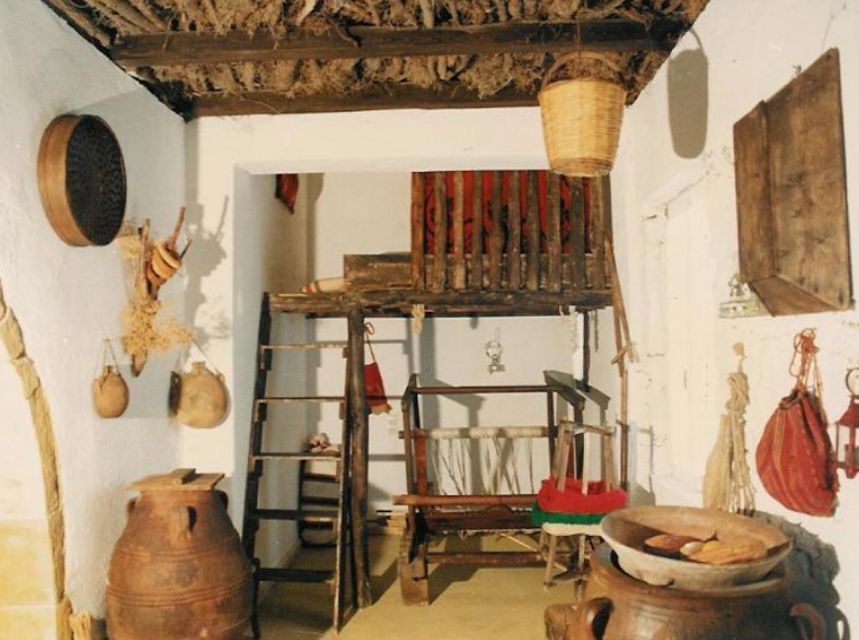
Lychnostatis makes Cretan heritage tangible: instead of viewing objects behind glass, you can step into traditional dwellings and see the tools and workspaces of everyday life. I like that the museum joins practical crafts with local nature, so a visit can range from a weaving workshop to a herb garden.
I also like the choice to explore at your own pace or add a film or private tour. The main consideration is that the guided tour is in Greek, and transport and café purchases are not included in the $10 entry price.
What makes Lychnostatis worth your time
- A traditional village house offers a close look at domestic life in Crete around two centuries ago.
- A working-life collection includes an olive oil press, a tsikoudia distillery, a threshing floor and craft workshops.
- The museum connects culture with nature, with a herbarium, fruit garden, herb garden, minerals and stones.
- Optional extras add context: choose an audiovisual film or a private guided tour, if available for your visit.
- A café and shop round out the visit, with typical drinks or sweets available to buy.
A museum built around everyday Cretan life
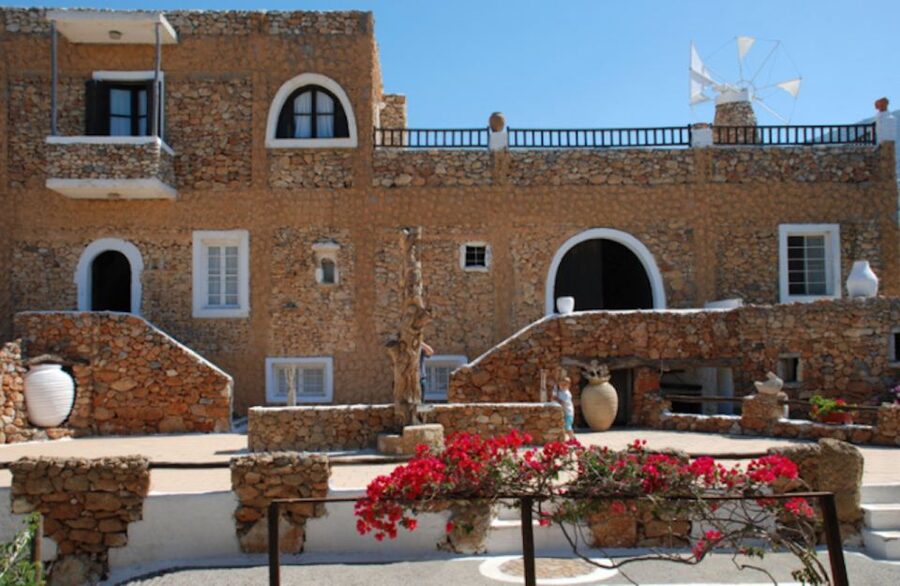
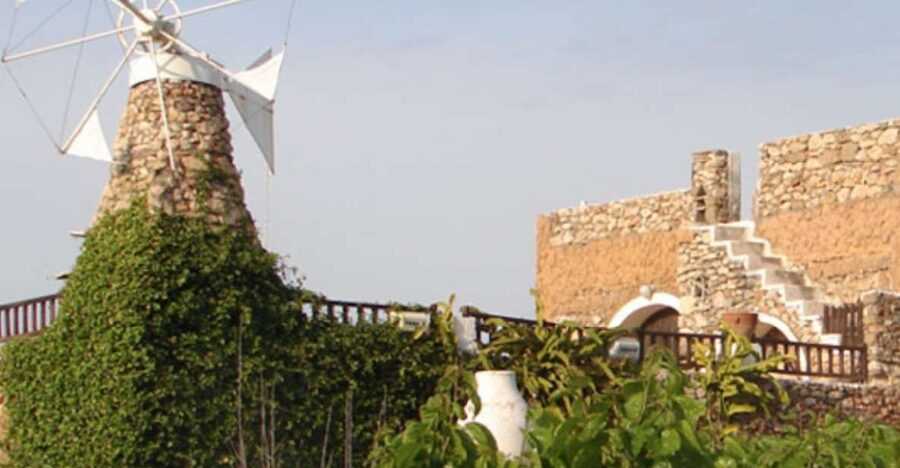
Lychnostatis Open Air Museum is devoted to Cretan folk heritage, ethnology, nature and culture. Its strength is the way these subjects meet in one place. A house, a distillery, a loom and a garden tell different parts of the same story: how people lived, made things and used the resources around them.
The museum’s displays focus on customs and material life rather than a single period or subject. You can see traditional buildings and tools, then move on to workshops, natural collections and exhibits devoted to folk artists. That variety gives you room to follow your own interests, though it also means you should not expect a short, tightly scripted museum route.
The collection is outdoors, with buildings and work areas spread across the site. The ticket gives you free time to explore, so you can linger over the subjects that matter to you instead of keeping pace with a group. If you prefer more explanation, you can add a private guided tour or an audiovisual film.
More museum and archaeology tours around Crete:
- Crete: Knossos Palace and Museum E-Tickets with Audio Guides
★ 4.0 · 828 reviews - Heraklion Archaeological Museum Ticket & Audio Guide
★ 4.3 · 396 reviews - Crete: Knossos Palace and Museum E-Tickets with Audio Guides
★ 4.0 · 126 reviews
Step inside a traditional house
The traditional dwellings are a natural place to begin. Seeing the inside of a village house makes daily life easier to picture than a display case of household objects alone. You can take in the rooms, tools and domestic details as part of a broader account of Cretan folk culture.
The museum aims to show how life was lived roughly two centuries ago. That makes the house useful even if you are not an architecture specialist: it gives you a point of reference for the many practical objects and crafts elsewhere on the grounds.
Take your time here. The value is not just in identifying an old object, but in considering what work it served and how it fitted into a household. If you like history best when it is connected to ordinary routines, this is likely to be one of the most rewarding stops.
Follow the work from olive press to distillery
Several exhibits focus on making and processing goods. The olive oil press shows one part of traditional production, while the tsikoudia distillery introduces the making of the local spirit also known as raki. A threshing floor adds another glimpse of agricultural work.
Together, these displays help you see the museum as more than a collection of old buildings. They show how food, drink and farm work shaped daily life. You can look at each installation on its own, or use them to build a broader picture of the skills and labor behind familiar Cretan products.
There is also a ceramic shop and a set of craft workshops devoted to weaving and plant dyeing, bees and wax, shoe-making and carpentry. These are worth seeking out if you want to understand how useful goods were made before modern production changed the process. The museum identifies these areas as part of its collection, but the information provided does not promise live demonstrations, so treat them as exhibits and workshops to explore rather than scheduled activities.
Look beyond the buildings
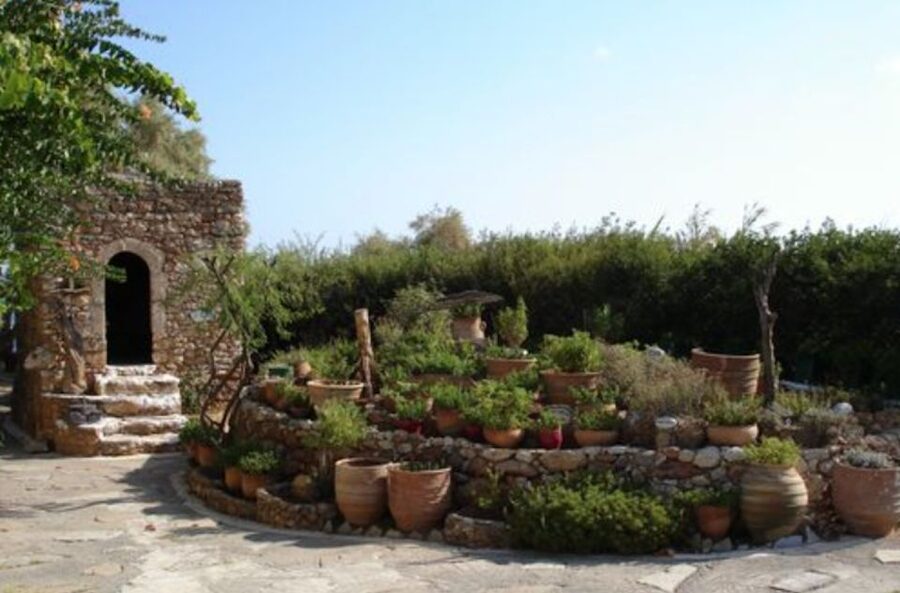
Lychnostatis also connects folk culture with the natural environment. A herbarium, a Cretan fruit garden and a herb garden offer a different kind of context from the houses and tools. They show the plant life associated with local knowledge and everyday use.
The mineral and stone exhibition widens the picture again, while the folk artists’ gallery brings attention to creative work. These sections make the visit feel varied, but they may matter more to some people than others. If your time is short, prioritize the traditional buildings and production displays first, then use the gardens and collections to fill out your visit.
The museum also has a chapel, a library stocked with Cretan books and periodicals, a temporary exhibitions hall and a souvenir shop. The library and temporary exhibits can add depth for visitors with a particular interest in local culture, while the shop is a convenient final stop. The details and availability of temporary exhibitions can change, so do not plan your visit around a particular show unless you have checked ahead.
More tickets and passes around Crete:
- Crete: Knossos Palace Entry Ticket with Optional Audio Guide
★ 3.9 · 2,251 reviews - Heraklion Area: CRETAquarium Admission Ticket
★ 4.4 · 2,055 reviews - Crete: Palace of Knossos E-Ticket and Audio Guide
★ 3.8 · 1,540 reviews - Chania: Balos Gramvousa Cruise with Transfer and Boat Ticket
★ 4.1 · 925 reviews
Add a film or private Greek-language tour
The standard ticket includes entry and time to explore independently. You can add an audiovisual film or a private guided group tour, depending on the option you choose. These extras suit different styles: a film can give you a structured introduction, while a guide can help connect the buildings and crafts as you move through the museum.
The live tour guide language is Greek. If you do not speak Greek, check the details of the selected option before booking rather than assuming the guided tour is offered in another language. No guide’s name is specified.
The museum has an auditorium with 100 seats for audiovisual shows and seminars, plus an open-air theater with 250 seats for cultural and artistic events. These spaces are part of the museum, but a ticket does not promise a particular screening, seminar or performance during your visit. Think of them as venues you may encounter, not guaranteed additions to the day.
Make room for a café stop
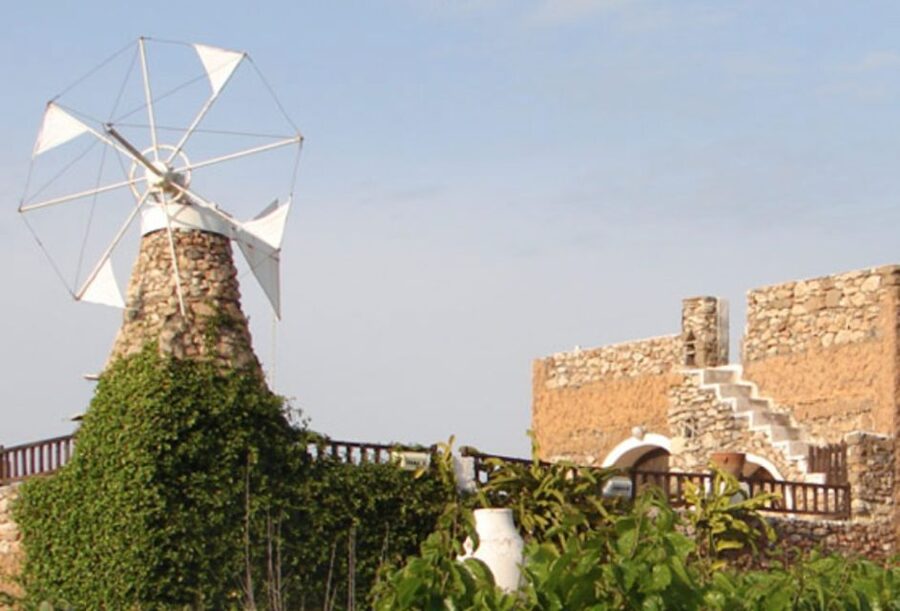
The museum café gives you the option to pause for a typical beverage or sweet. Traditional Cretan drinks are also available to sample there, according to the experience details. It is a nice way to end a visit that has focused on food production and local customs, but café purchases are not included in the entry ticket.
Food and drinks are listed as extras, so budget for them separately. The souvenir shop is another optional stop if you want to take home something connected with the museum’s crafts or collections.
How much time to set aside, and what the ticket is worth
The ticket is valid for one day, and the visit is self-paced. No fixed tour duration is specified, so the time you need depends on how many houses, workshops, gardens and exhibits you want to explore. The museum is substantial enough that rushing through every section would defeat the point; if your schedule is tight, choose a few priorities rather than trying to see everything.
At $10 per person, entry is a fairly accessible way to spend part of a day learning about Cretan life and folk culture. The value comes from the range of material on site: traditional dwellings, production spaces, craft displays, natural collections and cultural facilities. If you add a film or private tour, check the price for that selection separately, as the base price does not establish the cost of the extras.
The ticket lets you skip the ticket line, which can simplify arrival. You still need to arrange your own transport: the museum is reached by car or taxi, and transport is not included. The site is wheelchair accessible, a practical point worth considering when planning your visit.
Who will get the most from Lychnostatis
I would put Lychnostatis high on the list if you want to understand Crete through its homes, crafts and everyday work, rather than spend your time only among archaeological remains. It should also suit families and curious adults who like moving between different types of exhibits, though the experience is most rewarding if you enjoy looking closely and reading or listening for context.
The museum may be less appealing if you want a short, highly structured tour in a language other than Greek. You can explore independently, but the optional live guide is Greek-language, and the film’s language is not specified here. Check the selected option if language is important to your decision.
A practical tip: printed information sheets may be worn or damp, so do not rely on a single leaflet as your only source of context. If a sheet is hard to read, use the exhibits themselves as your guide and consider the film or private tour option for more explanation.
Should you book this visit?
Book Lychnostatis if you want a grounded look at Cretan folk culture, especially traditional homes, food production and handcrafts. The $10 entry ticket gives you a flexible day among a wide range of exhibits, and the café adds a pleasant optional stop.
Think twice if you have little time, need a guided visit in a language other than Greek, or expect transport and food to be included. For a self-paced cultural visit with plenty of variety, though, it is a sensible and rewarding choice.
FAQ
Where is Lychnostatis Open Air Museum?
It is in Crete, Greece. You can reach the museum by car or taxi.
How much does the entry ticket cost?
The listed price is $10 per person. Optional add-ons may have separate prices.
How long is the ticket valid?
The ticket is valid for one day, and you can explore the museum in your free time.
What is included in the entry ticket?
Entry and free time to explore are included. An audiovisual film or private guided group tour is included only if you select that option.
What language is the live guided tour in?
The live tour guide language is Greek.
Is transportation included?
No. You need to arrange your own transport. The museum can be reached by car or taxi.
Are food and drinks included?
No. Food and drinks are not included. The museum café offers typical beverages or sweets for purchase.
Can I cancel, and is the museum wheelchair accessible?
You can cancel up to 24 hours in advance for a full refund. The museum is wheelchair accessible.
Just added around Crete
- South Crete: Small group Full Day/ Sunset Sailing & Lunch★ 4.5 · 28 reviews
- Preveli Beach and Damnoni Kourtaliotikowaterfalls from Rethymno★ 5.0 · 23 reviews
- Full Day 4×4 Self-Drive Safari Tour in Crete with BBQ Lunch★ 5.0 · 68 reviews
- Small Group Sailing Cruise from Agios Nikolaos in Mirabello Bay★ 5.0 · 21 reviews
- Snorkeling Trip to Kourtaliotiko Gorge Waterfalls, Plakias, Crete★ 4.5 · 64 reviews
- Private Vehicle & Driver from Chania – Customizable Tour★ 5.0 · 23 reviews
- Knossos & Archaeological Museum Shared Guided Tour from Chania★ 5.0 · 41 reviews
- Sarakina Gorge hiking & swim Adventure – Jeep Safari South Crete★ 5.0 · 19 reviews
Crete Museum Tours, compared.
Knossos Palace and Museum E-Tickets with Audio Guides
Read our review →
Heraklion Archaeological Museum Ticket & Audio Guide
Read our review →
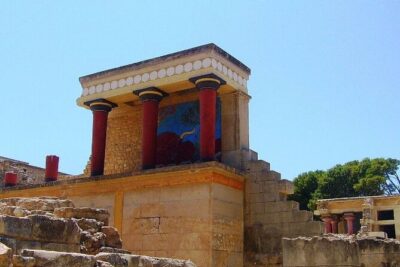
Knossos Palace, Museum & Rethymno city Private Tour from Chania
Read our review →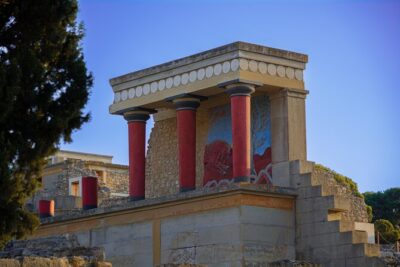
Heraklion Highlights: Knossos, Museum & Historic City Drive
Read our review →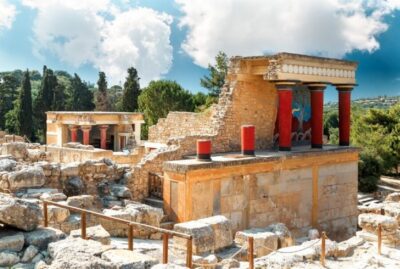
Knossos Palace, Museum & Heraklion City Tour From Chania
Read our review →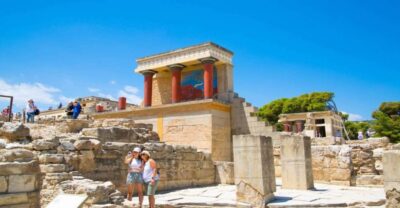
Knossos E-Ticket with Audio Guide & Optional Museum
Read our review →
Knossos & Archaeological Museum Shared Guided Tour from Chania
Read our review →Browse the lists this tour appears in