
Reviewed · CRETE VILLAGE TOURS
Traditional Villages of Kritsa and Kroustas
Kritsa gives this half-day outing its human scale: narrow lanes, lace and textile shops, old houses, and courtyards sit alongside the island’s more formal history at Panagia Kera Church and ancient Lato. The route then heads to Kroustas, a small mountain village where local food and wine are part of the appeal.
I like the mix of Byzantine art and lived-in village streets, and the small group size, capped at eight, leaves more room for questions than a large coach tour. The trade-off is that the six-hour schedule includes driving, and lunch is not included, so the time in each place is useful but not endless.
The route at a glance
- Panagia Kera Church: See well-preserved Byzantine wall paintings inside a three-aisled church near Kritsa.
- Ancient Lato: Walk the remains of a Doric city-state, set between two hills above Mirabello Bay.
- Kritsa: Allow time for lanes, handicraft shops, traditional coffee shops, and old buildings.
- Kroustas: Spend the longest stop in a small village known for local dishes, wine, and beekeeping.
- Small-group format: The van carries no more than eight people, with bottled water and soda included.
A village day with history between the stops
This tour pairs four very different stops in the hills east of Heraklion’s better-known resort circuit. You begin at the stated meeting point in Elounda, then travel to the church and archaeological site before spending longer in Kritsa and Kroustas. The listed tour time is about six hours, including transfers.
That driving time is worth keeping in mind when you compare this outing with a day spent in one town. The transfer between Elounda and the sightseeing area is estimated at roughly one to one and a half hours, depending on traffic. The route covers a lot, but the attraction is the contrast: sacred art, ancient civic remains, a larger village with shops, then a smaller village where food and local life take the lead.
The group is limited to eight, a useful size for a route with several short stops. A compact van is less imposing than a coach, and there is a better chance to ask the driver questions as you go. There may also be some flexibility to linger according to the group’s interests, though you should not assume every stop can be extended. One driver named Christos has been associated with the route and explained sights along the way; the provider does not guarantee a particular driver.
More village tours around Crete:
- Crete: Quad Safari, Olive Mill with Tasting & Ghost Village
★ 4.9 · 1,004 reviews - Elafonissi Beach Day Trip from Chania -Stop in Elos Village
★ 4.5 · 744 reviews - Crete: Quad Off-Road Tour to Villages with Hotel Transfers
★ 4.8 · 557 reviews
Panagia Kera and its painted walls
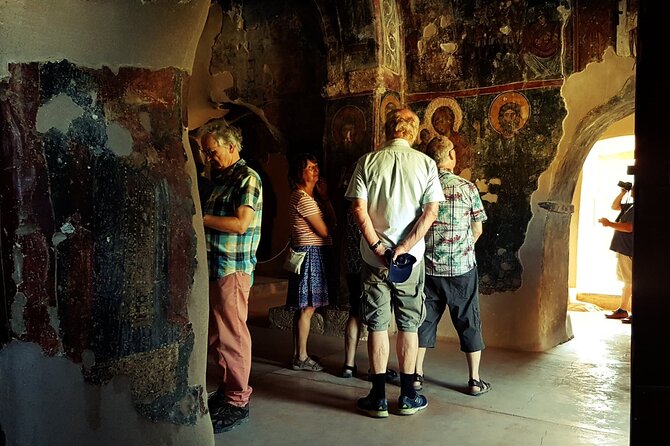
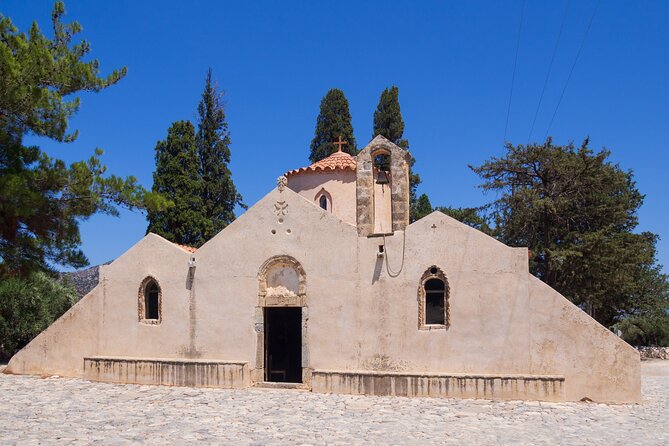
The first stop is Panagia Kera, also called the Church of the All-Holy Virgin, about 500 meters south of Kritsa. You have around 30 minutes here. Its three aisles, barrel-vaulted roof, and dome provide the setting for the main reason to go inside: extensive, well-preserved wall paintings from different periods of Byzantine art.
This is a compact visit, not a long church tour. If religious art interests you, take a moment to look closely at the paintings and notice how the decoration varies across the church. A short stop can still be rewarding, but you will want to arrive ready to focus rather than expect time for a leisurely, self-guided study of every detail.
Entry is not included. The fee is €3, so keep a little cash or a suitable payment method handy. The tour includes bottled water and soda, but it does not cover admission at this church or at Lato.
Ancient Lato above Mirabello Bay
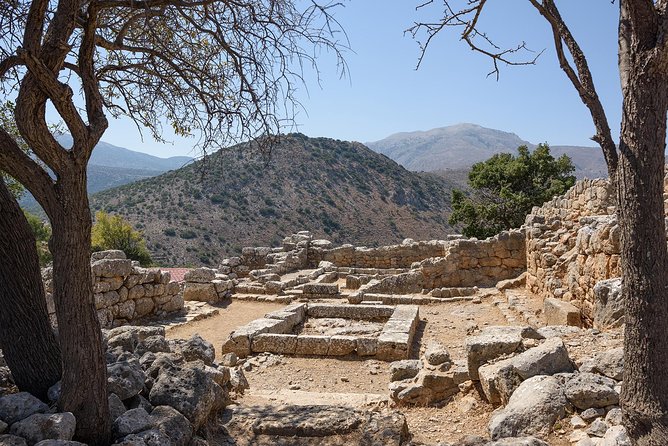
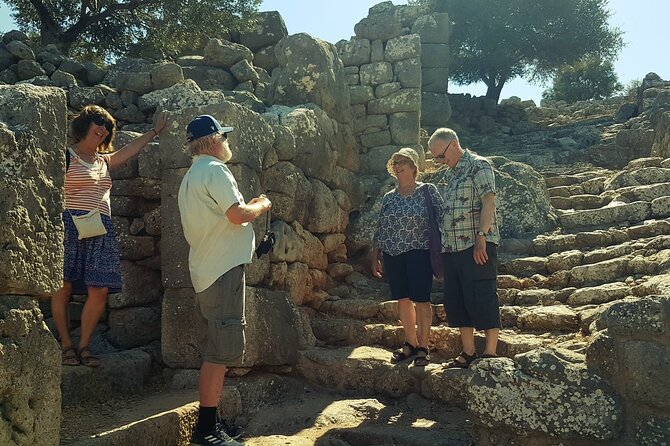
From the church, the route continues to Lato, one of Crete’s important Doric city-states. The ancient settlement occupies a saddle between two hills, a position chosen for protection that also gives it broad views over Mirabello Bay. Plan on about 50 minutes at the site.
Lato’s story helps make sense of the ruins. The city was named for Leto, mother of Apollo and Artemis, though its principal goddess was Eileithyia. The city also minted coins bearing her image. Nearchos, admiral of Alexander the Great, was born here, adding a notable name to a place that otherwise asks you to imagine the rhythms of an ancient town from its surviving remains.
Lato had a harbor at Lato pros Kamara, the site of modern Agios Nikolaos. As the harbor settlement prospered by the middle of the second century AD, the administrative center shifted there, and Lato was eventually abandoned. That change gives the site a clear arc: a hilltop city shaped by security and position, then eclipsed by a growing port.
The entry fee is €3 and is separate from the tour price. The site is an archaeological area rather than a museum display, so the value depends partly on your interest in ruins and your willingness to picture the city from its setting. The bay views help; they also make this more than a stop for ancient stones alone.
Kritsa: lace, lanes, and everyday village life
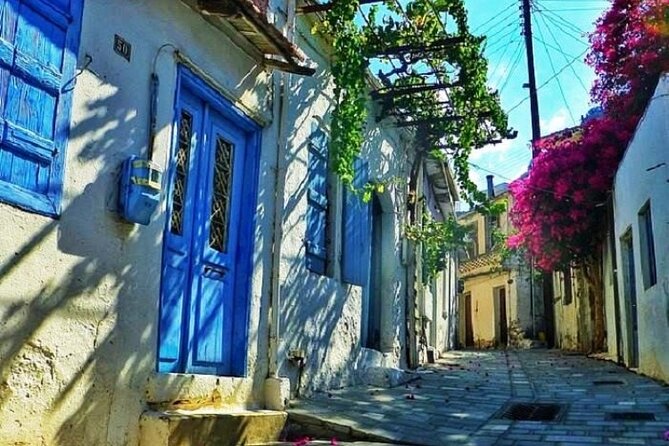
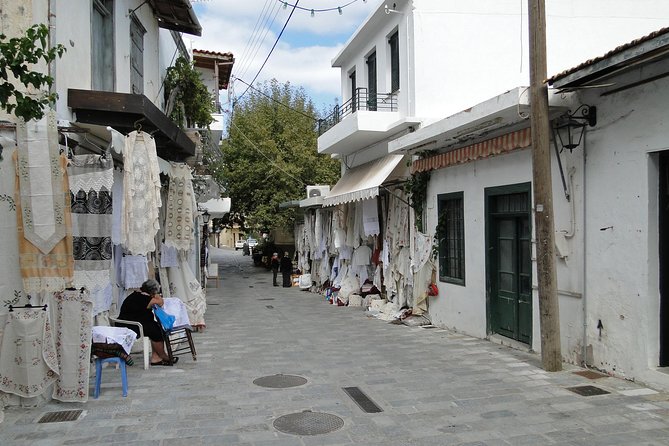
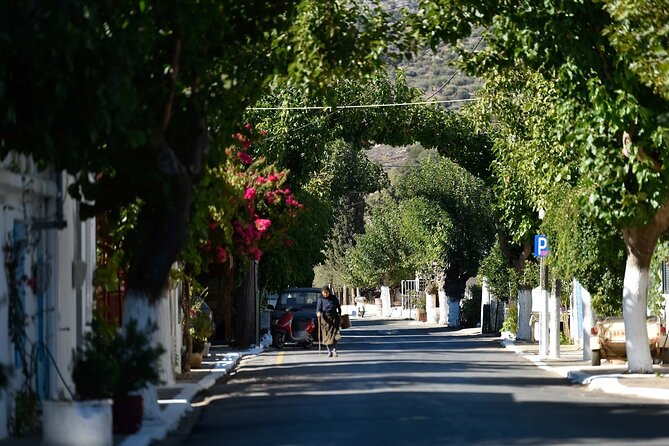
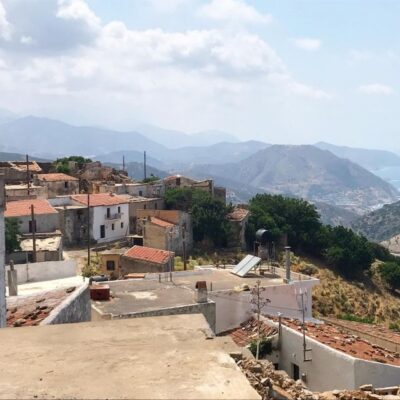
Kritsa gets about an hour and a half, enough to explore at a gentler pace than the two earlier stops. The village is known for lace making and handicrafts, and its narrow lanes, old buildings, courtyards, textile shops, and traditional coffee shops give you several ways to spend the time.
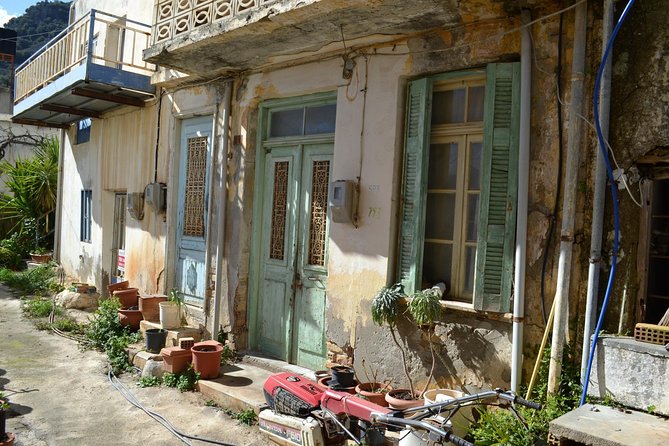
I would resist treating Kritsa as a perfectly preserved museum. It has beautiful old corners, but some houses are abandoned, and the village mixes the cared-for with the worn. That contrast is part of what you see in a real settlement rather than a staged heritage display. Expect shops and places to pause, but do not assume every street will be full of activity.
The stop is particularly useful if you want to browse local textiles or see how traditional craft sits alongside ordinary village life. There are also folklore collections and Byzantine temples in the settlement, though the schedule does not specify a guided visit to each one. Use the time to choose what matters to you: a slow walk through the lanes, a look at the shops, or a coffee break.
Kritsa can be quieter than its reputation suggests, especially outside peak moments, but conditions vary. If you find the lanes busy, the small-group tour still gives you a better chance to move at your own pace than a large coach excursion. If they are quiet, take advantage of it and look beyond the main shopping streets.
Same island, a different kind of day:
- From Kissamos Port: Boat Cruise to Balos Lagoon & Gramvousa
★ 4.2 · 6,755 reviews - Crete: Day Trip to Agios Nikolaos and Spinalonga Island
★ 4.6 · 4,416 reviews - From Chania: Full-Day Samaria Gorge Trek Excursion & Guide
★ 4.6 · 3,191 reviews - Agios Nikolaos: Boat Trip to Spinalonga with Swim Stop
★ 4.4 · 3,031 reviews
Kroustas: a longer stop for local food
The final village stop is Kroustas, with about one hour and 40 minutes. It has roughly 500 residents and is described through its stone houses, narrow streets, and countryside setting. This is the tour’s longest village visit, and it is where the food angle becomes especially practical.
Lunch is not included, so plan to buy a meal if you want to try the local cooking. Kroustas is associated with skioufihta, a traditional local pasta, and kalitsounia, pastries that can be sweet or savory. Other regional specialties to look for include myzithropites, cheese pies, ftazymo bread, and boiled goat. The tour does not promise that every dish will be available on the day, so think of these as foods to ask about rather than a fixed tasting menu.
Wine is another reason to linger. Local varieties include Liatiko and Mandilari, and beekeeping is well developed in the area. You have time to sit down for a meal or explore the village, but not necessarily both at length. If food is your priority, make the meal your main activity and ask what is being served locally.
This stop offers a different kind of historical context from Lato. Rather than reading a settlement through ruins, you encounter a living village through its food, houses, and small-scale businesses. It is a good counterweight to the more archaeological first half of the day.
What the price covers, and what it does not
At $69.46 per person, the tour bundles transport and visits to four places over about six hours. For someone staying in Elounda who would rather not arrange a car and navigate the route independently, that can be a fair value, especially with a maximum group of eight. The small size is a meaningful part of the price, not just a comfort detail: it can make the drive more conversational and the stops easier to manage.
Budget for two additional costs. Admission to Panagia Kera and Lato is €3 each, or €6 total if you visit both. Lunch in Kroustas is also on you. Bottled water and soda are included, which is handy on a day that involves walking and driving, but the tour is not an all-inclusive food outing.
The timetable gives you substantial time in the two villages, but only 30 minutes at the church and 50 minutes at Lato. If you are an art or archaeology enthusiast who likes to linger, those stops may feel brisk. If your priority is seeing a range of places without planning each transfer yourself, the balance makes more sense.
Who should book this outing?
I would consider this tour if you are based in or near Elounda and want a guided route that connects local life with Crete’s Byzantine and ancient past. It suits people who enjoy village walks, regional food, handicrafts, and a bit of archaeology in the same day. The limited group size is also appealing if you prefer a quieter vehicle and the chance to ask questions.
It is less suited to anyone hoping for a long, uninterrupted visit to one site, a meal included in the price, or a day with very little driving. The route is broad by design. Its value lies in seeing how church art, ancient Lato, Kritsa’s crafts, and Kroustas’s food traditions fit into one outing, not in spending half a day at any single place.
The provider offers pickup, but the stated start and end point is Andrea Papandreou 36, Schisma Elountas 720 53, Greece. Confirm the pickup arrangement for your accommodation rather than assuming a door-to-door collection. Most people can participate, and service animals are allowed. The activity depends on good weather; if poor weather cancels it, you are offered another date or a refund. You can cancel for a full refund up to 24 hours before the start time.
Should you book the Traditional Villages of Kritsa and Kroustas tour?
Book it if you want a compact, small-group introduction to this part of Crete, with enough time to browse Kritsa and eat in Kroustas, plus two strong historical stops along the way. The price is reasonable if you value transport and a small group, but remember the €6 in entrance fees and the cost of lunch.
Skip it if your ideal day means an unhurried deep exploration of a church or archaeological site. For most people who want variety and a taste of village life without arranging their own transport, the mix is the point.
FAQ
How long is the tour?
The tour lasts about six hours, including transfer time. The time spent at the four listed stops adds up to about four and a half hours.
Where does the tour start and finish?
The stated meeting point is Andrea Papandreou 36, Schisma Elountas 720 53, Greece. The activity ends back at the meeting point. Pickup is offered, so confirm whether it applies to your accommodation.
How many people are in the group?
The tour has a maximum of eight people.
Are the entrance fees included?
No. Entry costs €3 at Panagia Kera Church and €3 at Lato.
Is lunch included?
No. Lunch in Kroustas is not included. Bottled water and soda are included.
Can I cancel if the weather is poor?
The activity requires good weather. If poor weather causes cancellation, you are offered a different date or a full refund. You can also cancel for a full refund at least 24 hours before the start time.
Just added around Crete
- South Crete: Small group Full Day/ Sunset Sailing & Lunch★ 4.5 · 28 reviews
- Preveli Beach and Damnoni Kourtaliotikowaterfalls from Rethymno★ 5.0 · 23 reviews
- Full Day 4×4 Self-Drive Safari Tour in Crete with BBQ Lunch★ 5.0 · 68 reviews
- Small Group Sailing Cruise from Agios Nikolaos in Mirabello Bay★ 5.0 · 21 reviews
- Snorkeling Trip to Kourtaliotiko Gorge Waterfalls, Plakias, Crete★ 4.5 · 64 reviews
- Private Vehicle & Driver from Chania – Customizable Tour★ 5.0 · 23 reviews
- Knossos & Archaeological Museum Shared Guided Tour from Chania★ 5.0 · 41 reviews
- Sarakina Gorge hiking & swim Adventure – Jeep Safari South Crete★ 5.0 · 19 reviews
Crete Village Tours, compared.
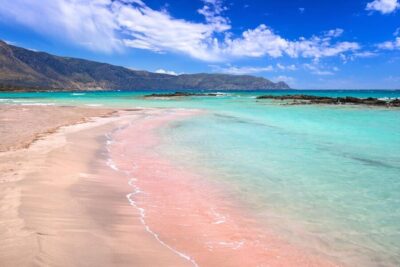
Elafonissi Beach Day Trip from Chania -Stop in Elos Village
Read our review →
Knossos-Zeus Cave -Old Traditional Villages-Olive Oil Factory
Read our review →
Quad Off-Road Tour to Villages with Hotel Transfers
Read our review →
Knossos & Lasithi Plateau: Zeus Cave,Villages, Olive Oil Tour
Read our review →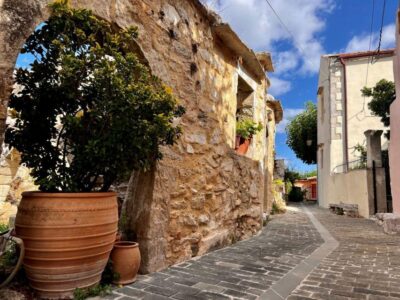
The 7 Villages of Apokoronas Tour – Explore East Chania Mainland
Read our review →
Elafonissi Beach Tour from Chania with stop in Elos Village
Read our review →Browse the lists this tour appears in