Reviewed · CRETE TOURS
WWII – The Battle of Crete Day Tour
The Battle of Crete becomes easier to grasp when you stand at the places where it unfolded. This six-hour trip from Chania visits Maleme, Tavronitis Bridge and two war cemeteries, with a local guide to connect the sites to the invasion and the people caught up in it.
I like two things especially: a small group, capped at 15, leaves room for questions, and the guide’s local perspective brings Cretan experiences into a story often told mainly through military strategy. Hotel pickup, transport and entrance fees are included, so you can focus on the history rather than arranging several separate visits.
One consideration: six hours is a short time for a complicated battle. You’ll get a useful overview, but anyone hoping to follow every movement on the ground may want to read about the campaign beforehand. The tour also depends on reaching specific pickup points in the Chania region.
At a glance
- Maleme and Tavronitis Bridge put key locations from the battle on the day’s route.
- Two military cemeteries offer a quiet chance to reflect on the human cost.
- Local English-speaking guides have included Babis, Yannis and Giannis; guide names can vary.
- Air-conditioned minivan transport connects the sites, with snacks and bottled water included.
- A small group of no more than 15 makes it easier to ask questions and take photographs.
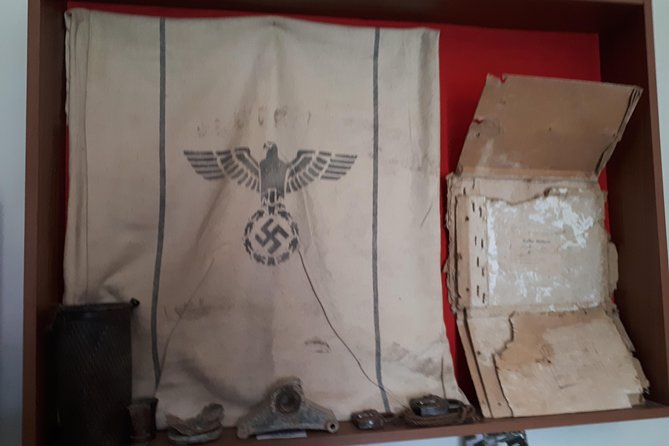
- A private memorabilia collection may feature as an additional stop, though it is not listed among the formal itinerary stops.
A six-hour route through the Battle of Crete
This is a focused day trip, not a full military-history seminar or a march across the battlefields. Starting at 9:00 am, the tour takes you from Chania by minivan to several sites associated with the 1941 invasion. The route is designed to help you see more than one place in a day without hiring a car or trying to piece together the stops yourself.
That convenience matters. A battlefield site can be hard to understand on its own, especially if you arrive without context about what happened there. Your English-speaking driver and escort helps link the places, explain their significance and take questions as you go. The guides have included Babis, Yannis, Giannis and Stelios, among others, so you should not assume one particular guide is assigned to every departure.
The tour is capped at 15 people. That is small enough to make conversation and questions practical, though it is still a group outing with a set schedule. Some outings have been much smaller, which can make it easier for the guide to tailor explanations to the group’s interests.
Maleme: begin where the battle took shape
Maleme is the first listed stop and the starting point for the day’s exploration. It has an important place in the Battle of Crete, and beginning here gives the guide a natural place to introduce the invasion and the events that shaped the route ahead.
The stop lasts about 50 minutes and has no admission charge. Use the time to get your bearings and ask how the different locations fit together. A guide can help you build a basic mental map before the day moves on, which is especially useful if you are new to the subject.
If you already know the battle from books, Maleme can help connect names and dates to real places. If you are starting from scratch, don’t worry: the tour’s appeal is that a guide explains the background as you go. Still, the subject is complex, and the short format means the introduction cannot cover every unit, decision or change in the fighting.
More trips and days out around Crete:
- From Kissamos Port: Boat Cruise to Balos Lagoon & Gramvousa
★ 4.2 · 6,755 reviews - Crete: Day Trip to Agios Nikolaos and Spinalonga Island
★ 4.6 · 4,416 reviews - From Chania: Full-Day Samaria Gorge Trek Excursion & Guide
★ 4.6 · 3,191 reviews
Tavronitis Bridge: a site with a strategic role
The next listed stop is Tavronitis Bridge, where you spend about 40 minutes. The bridge is one of the day’s historical sites, and its value lies in seeing a real location rather than treating the battle as a sequence of arrows on a map.
This is a good place to ask the guide to explain what happened here and how the site relates to the larger campaign. Guides have been praised for bringing the fighting and local resistance into the same account, rather than presenting the battle as strategy alone. That wider view matters in Crete, where the story includes Cretan civilians as well as German and Allied forces.
A practical limit applies: a short visit can give you a feel for the place, but not necessarily a full picture of the battle’s movement across the island. One visitor with a strong military-history background found it difficult to follow the action from the stops and maps alone. If you want to track the sequence closely, a little reading beforehand will help you make better use of the guide’s explanations.
German Military Cemetery: a pause in the story
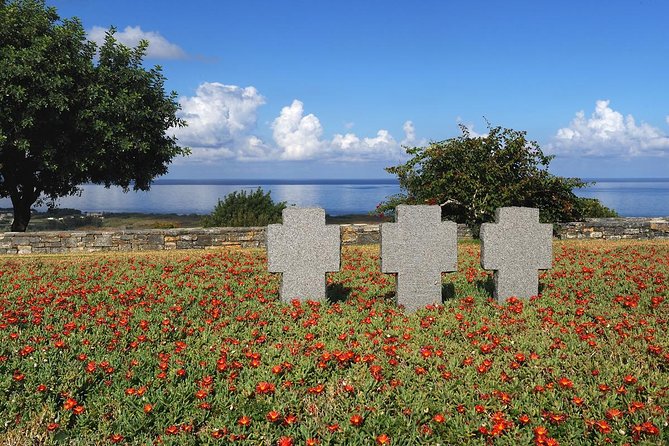
The German Military Cemetery is a quieter, more reflective stop, lasting about 30 minutes. After visiting battle sites, you meet the consequences of the conflict in a place devoted to those who died on the German side.
The cemetery helps keep the tour from becoming only a discussion of tactics and commanders. It offers a direct reminder that the invasion brought loss to people on all sides. Give yourself time to look around and take in the setting, rather than treating this as just another item to tick off.
The subject can feel heavy, and the stop is brief. If you have particular questions about the people buried there or how the cemetery relates to the campaign, ask your guide. The tour’s small group format makes that sort of exchange easier than it would be on a large coach outing.
Souda Bay War Cemetery: Commonwealth losses remembered
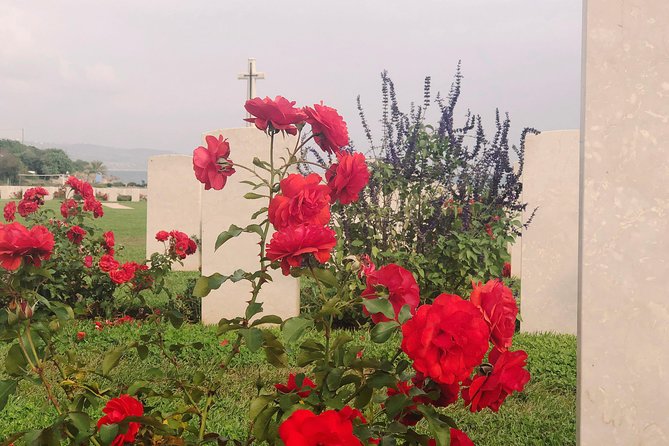
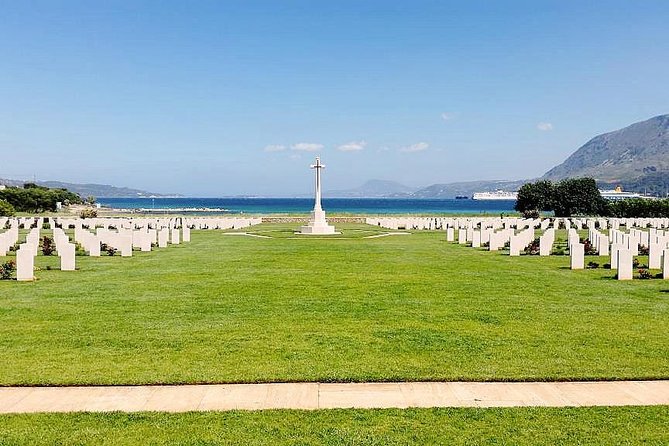
At Souda Bay, the tour visits the British Commonwealth war cemetery for around 30 minutes. Together, the German and Commonwealth cemeteries offer a useful counterpoint: the day looks at opposing forces, but the cemeteries make the cost of the conflict personal.
Some visitors have a family connection to the Allied forces who fought or were evacuated from Crete. For them, this stop may carry particular meaning. Others may arrive without a personal link and still find the cemetery helps place the history in human terms. You do not need to be a military expert to appreciate why the visit matters.
A report of a Greek Air Force flypast at Souda Bay describes an exceptional moment, not something to count on as part of the tour. Plan for a cemetery visit, not a special event. The listed stop is a valuable one even without anything extra.
Same island, a different kind of day:
- Agios Nikolaos: Boat Trip to Spinalonga with Swim Stop
★ 4.4 · 3,031 reviews - Heraklion: Dia Island Sailboat Cruise with Swimming and Meal
★ 4.8 · 2,579 reviews - Crete: Knossos Palace Entry Ticket with Optional Audio Guide
★ 3.9 · 2,251 reviews - Heraklion Area: CRETAquarium Admission Ticket
★ 4.4 · 2,055 reviews
A private collection may add a personal layer
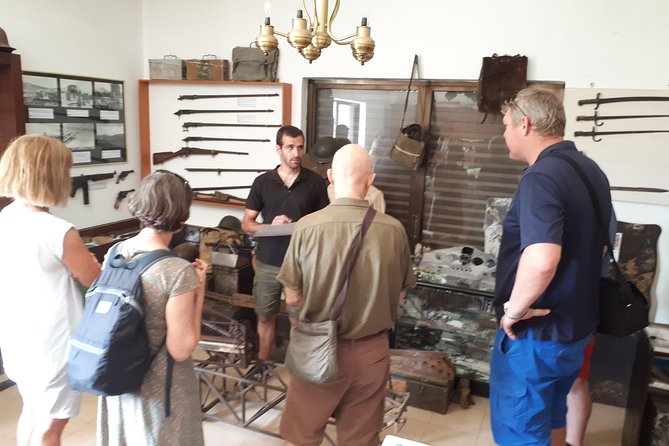
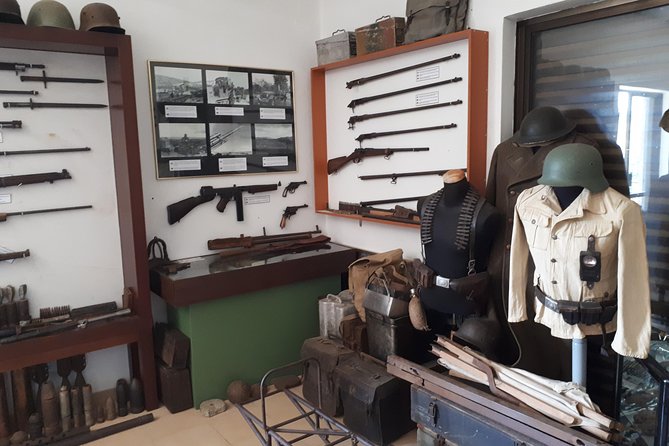
The formal itinerary names four locations, but some outings have also included a visit to a local collector’s home or private collection of wartime memorabilia. This has been a highlight for some people, offering objects connected to the battle and a more personal way into the period.
Treat this as a possible extra, not a guaranteed stop. It is not included among the listed itinerary stops, and the details may depend on the day. If seeing the collection is important to you, confirm whether it is part of your departure before booking.
The visit can suit a wide range of interests. A collector’s objects may appeal to military-history readers, while the personal setting can help make the past feel close to everyday life. One account describes being handed historic weapons, but you should not assume that handling items is included or permitted on every tour.
What the guide brings to the day
The guide is central to this experience. You are not simply being driven from one site to another: the value comes from someone explaining the battle, answering questions and helping connect the stops. Guides have been described as engaging and empathetic, and their explanations have helped visitors understand both military events and the impact on Cretans.
The personal element can be especially useful if you are following a family story. One guide helped a visitor piece together details about a relative who had served with Allied forces on Crete. That kind of help depends on the guide’s knowledge and on what information you bring, so it cannot be promised. But if you have a family connection, bring names, dates or unit details and ask what the guide can help clarify.
Guides also answer questions about Crete beyond the battle. That can make the drive between stops part of the experience, not just time spent getting from place to place. If you are curious about local life as well as wartime events, make room for those questions too.
Comfort, timing and what the price covers
At $114.89 per person, the price covers about six hours of guided transport, all entrance fees, snacks and bottled water, taxes and handling charges, plus pickup and drop-off from specific places in the Chania region. The minivan is air-conditioned, a welcome detail on a hot day when you are moving between outdoor locations.
The main value is the combination of transport and interpretation. You could try to reach some sites independently, but arranging the route and understanding what you are seeing would take more effort. Here, one booking brings the main stops together and gives you a guide to help put them in context.
Do check whether your accommodation is among the specified pickup places in the Chania region. The tour ends back at the meeting point, and the scheduled start time is 9:00 am. You receive confirmation at booking, and most people can participate. The maximum group size is 15.
The tour is recommended by 99% of participants and has a 4.9 rating from 103 reviews. Those figures are encouraging, but they don’t settle the main question for you: is the format right for your interests? If you want a guided introduction to several important sites, the transport and local commentary are strong value. If your priority is a detailed military analysis of the battle’s movement, six hours may feel compressed.
How to get the most from your visit
You do not need to study the battle in advance to enjoy the tour. But if you want to follow its phases and movements closely, read a short account beforehand. Knowing the basic outline will give you more to ask about at Maleme and Tavronitis Bridge, and make it easier to connect the different locations.
Bring any questions you have about family history, the Allied forces, German forces or Cretan resistance. The guide’s answers are a major part of the day, and the small group should make it easier to speak up. Take advantage of the time at each stop to ask how that site fits into the larger story.
Also think about your own reason for going. A military-history enthusiast may want to focus on tactics and command decisions. Someone with a family link may want to trace a relative’s route. A curious visitor with no background can focus on the people and places that give Crete’s wartime history its meaning.
Should you book the Battle of Crete tour?
Book this tour if you are staying in the Chania region and want a guided, practical introduction to the Battle of Crete. Maleme, Tavronitis Bridge and the two cemeteries give the day a clear arc, while a local guide helps connect military events with the experience of the island and its people.
Think twice if you want hours at each battlefield or a fully detailed account of every stage of the fighting. This is a compact overview with a set route, not an open-ended study day. For most curious visitors, though, the mix of sites, transport and personal commentary makes it a worthwhile way to spend a morning and afternoon.
FAQ
How long is the tour?
The tour lasts about six hours.
What time does it start?
The scheduled start time is 9:00 am.
Where does the tour go?
The listed stops are Maleme, Tavronitis Bridge, the German Military Cemetery and Souda Bay War Cemetery.
Is pickup included?
Yes. Pickup and drop-off are included from specific places in the Chania region.
What transport is used?
You travel by air-conditioned minibus or minivan.
Is the tour in English?
Yes. The tour is offered in English with a local English-speaking driver and escort.
What is included in the price?
The price includes entrance fees, snacks, bottled water, transport, pickup and drop-off from specific Chania region places, taxes, fees and handling charges.
How many people can join?
The group has a maximum of 15 travelers.
Is the visit to a private collection guaranteed?
No. A private collection is not listed among the formal itinerary stops, so confirm with the operator if it is important to you.
What happens if bad weather cancels the tour?
If poor weather causes cancellation, you will be offered another date or a full refund.
Just added around Crete
- South Crete: Small group Full Day/ Sunset Sailing & Lunch★ 4.5 · 28 reviews
- Preveli Beach and Damnoni Kourtaliotikowaterfalls from Rethymno★ 5.0 · 23 reviews
- Full Day 4×4 Self-Drive Safari Tour in Crete with BBQ Lunch★ 5.0 · 68 reviews
- Small Group Sailing Cruise from Agios Nikolaos in Mirabello Bay★ 5.0 · 21 reviews
- Snorkeling Trip to Kourtaliotiko Gorge Waterfalls, Plakias, Crete★ 4.5 · 64 reviews
- Private Vehicle & Driver from Chania – Customizable Tour★ 5.0 · 23 reviews
- Knossos & Archaeological Museum Shared Guided Tour from Chania★ 5.0 · 41 reviews
- Sarakina Gorge hiking & swim Adventure – Jeep Safari South Crete★ 5.0 · 19 reviews
Crete Tours, compared.
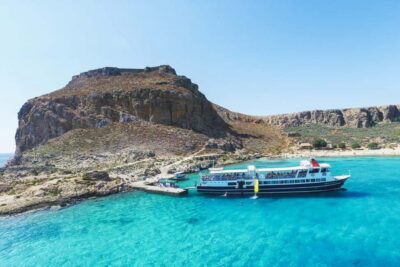
From Kissamos Port: Boat Cruise to Balos Lagoon & Gramvousa
Read our review →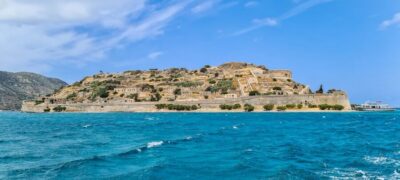
Day Trip to Agios Nikolaos and Spinalonga Island
Read our review →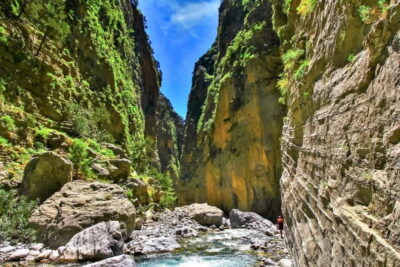
Full-Day Samaria Gorge Trek Excursion & Guide
Read our review →

Dia Island Sailboat Cruise with Swimming and Meal
Read our review →
Knossos Palace Entry Ticket with Optional Audio Guide
Read our review →